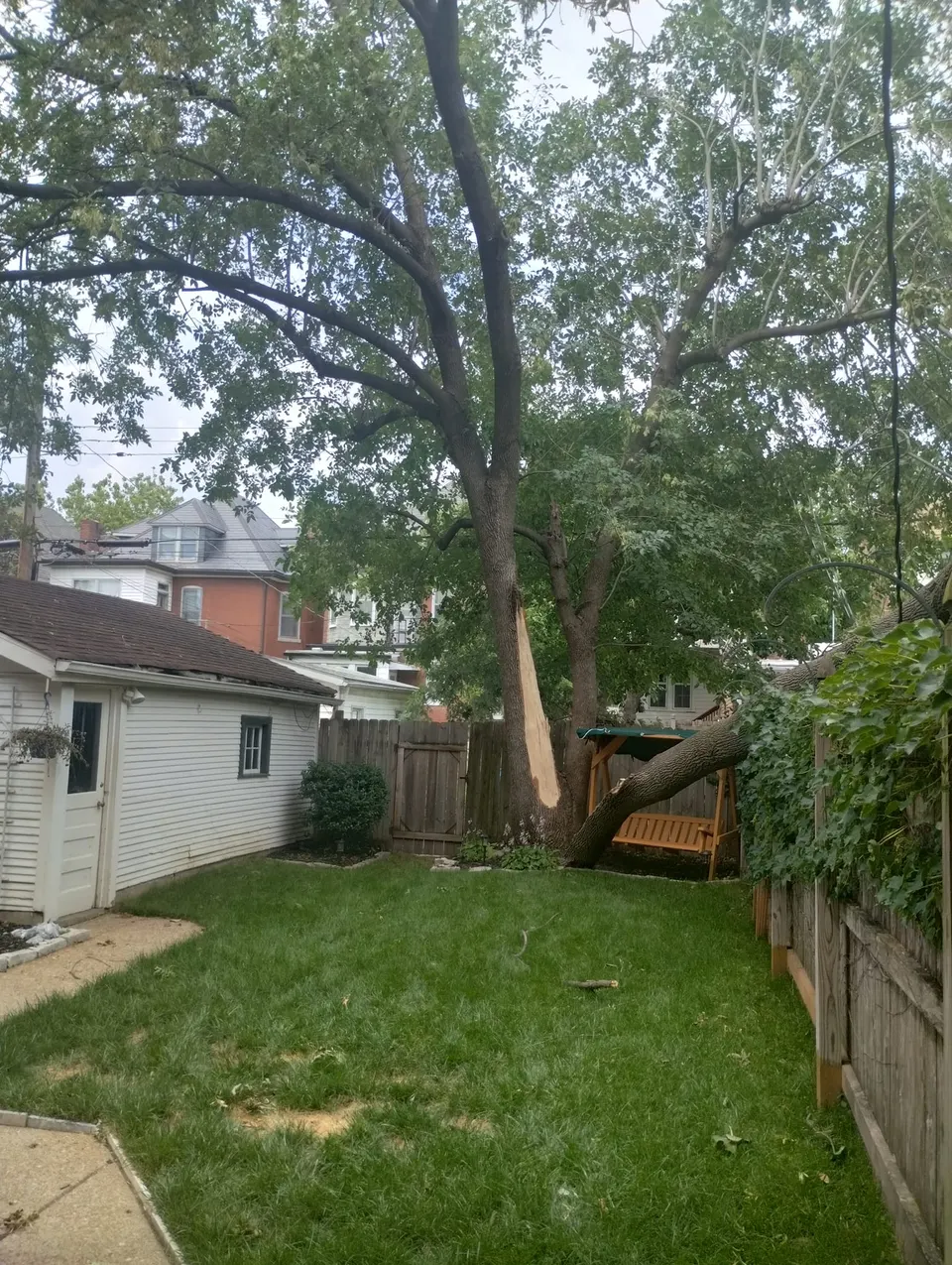
Tree Cabling & Bracing in Saint Louis, MO
Save your favorite trees instead of removing them. Thompson Tree Care installs professional cabling and bracing systems to structurally support trees with split trunks, heavy limbs, or storm vulnerability throughout Saint Louis, Missouri.
What Is Tree Cabling and Bracing?
Tree cabling and bracing in Saint Louis, MO is a structural support method that uses flexible cables and rigid rods to reinforce trees with weakened or compromised architecture. Rather than removing a beautiful, mature tree that has developed a structural defect, cabling and bracing allows you to preserve it safely for years or even decades longer.
Cabling involves installing high-strength cables high in the canopy to connect co-dominant stems or heavy limbs, redistributing stress loads and limiting dangerous movement during wind and ice events. Bracing uses threaded steel rods installed through split or cracked trunks and union points to physically hold the tree together and prevent further splitting.
These techniques are recognized by the International Society of Arboriculture (ISA) as standard practice for tree preservation. At Thompson Tree Care, our certified arborist determines whether cabling, bracing, or a combination of both is appropriate based on the specific structural issue, tree species, overall health, and risk factors. Cabling is a common fit for the old heritage oaks and maples found in Kirkwood and Belleville.
When Does a Tree Need Cabling or Bracing?
Not every tree with an imperfect structure needs support. But certain conditions significantly increase the risk of failure, especially during the severe weather Saint Louis experiences regularly. Here are the most common situations where tree cabling and bracing is recommended:
- Co-dominant stems with included bark: This is the most common structural defect in mature shade trees. Two or more leaders grow from a single point with bark trapped between them, creating a weak union that can split under wind or ice loading. Many oaks, maples, and elms throughout Saint Louis develop this pattern.
- Heavy, extended limbs: Large limbs that extend far from the trunk with significant end-weight are prone to breaking. Cabling reduces the load on the attachment point and limits how far the limb can drop if it does fail.
- Trees with previous storm damage: If a tree survived a storm but has cracks, partially split unions, or weakened attachments, cabling can prevent the next storm from finishing the job. Our storm damage service often includes cabling as part of the restoration plan.
- Leaning trees over targets: A tree that leans over a house, patio, or play area may not need removal if the lean is stable and the root system is intact. Supplemental cabling adds an extra layer of security.
- Historic or high-value trees: Some trees are simply worth preserving. Century-old oaks, specimen trees in historic neighborhoods, and trees with sentimental value can often be saved with proper structural support rather than removed.
How Does the Installation Process Work?
Certified Arborist Assessment
Our arborist performs a thorough structural evaluation of the tree, identifying failure points, assessing overall health, and determining whether cabling, bracing, pruning, or removal is the best option. This assessment considers the tree's species, age, location, and the specific targets at risk below.
System Design
Based on the assessment, we design a cable and brace configuration that addresses the specific structural weaknesses. This includes determining cable placement heights (typically two-thirds of the way between the weak union and the branch tips), brace rod positions, and material specifications.
Professional Installation
Our trained climbers install the hardware in the canopy. Dynamic cable systems use eye bolts and synthetic rope with controlled elasticity. Brace rods are drilled through the union point and secured with washers and nuts. The installation is designed to be nearly invisible from the ground.
Complementary Pruning
We often combine cabling with strategic pruning to reduce end-weight on supported limbs, improve the cable's effectiveness, and optimize the tree's overall structure. This combined approach provides the most comprehensive protection.
Preserving Valuable Trees in Saint Louis
Mature trees in Saint Louis, MO are irreplaceable assets. A 100-year-old white oak provides more shade, produces more oxygen, absorbs more stormwater, and contributes more to your property value than any newly planted tree will for decades. When a tree can be saved through cabling and bracing rather than removed, you preserve not just the tree itself but the environmental and financial benefits it provides.
Tree cabling and bracing is also significantly less expensive than large tree removal. While removing a mature tree might cost $2,000 to $5,000 or more, a cable and brace installation typically runs $300 to $1,500 — a fraction of the cost, with years of continued benefit from the preserved tree.
If you have a tree on your property that concerns you but you do not want to lose, call Thompson Tree Care at (314) 712-3035 for a free assessment. Our certified arborist will give you an honest evaluation of whether the tree can be saved and what it will take to do it right.
Frequently Asked Questions About Tree Cabling & Bracing
When installed correctly by a certified arborist, tree cabling does not hurt the tree. Modern dynamic cabling systems use flexible synthetic materials that allow natural movement while providing support. Older static steel cable systems require drilling, which creates small wounds that healthy trees can compartmentalize. The benefit of preventing a catastrophic split far outweighs the minimal impact of installation.
Dynamic synthetic cable systems typically last 5 to 8 years before needing replacement, while traditional steel cable systems can last 15 to 25 years. Both types require periodic inspection by a certified arborist — we recommend annual checkups to ensure the hardware remains effective and properly tensioned.
Tree cabling and bracing in Saint Louis typically costs between $300 and $1,500 per tree depending on the size, number of cables or braces needed, and the complexity of the installation. This is often significantly less expensive than removing a large, mature tree, making it an excellent preservation option.
Alternatives to cabling include crown reduction pruning to reduce weight on heavy limbs, complete removal of the problematic limb, or full tree removal if the structural issue is too severe. Our certified arborist assesses each situation and recommends the most appropriate solution — sometimes a combination of pruning and cabling is the best approach.
Other Services You May Need
Sometimes support systems are only part of the answer. Explore our full range of tree services in Saint Louis, from expert pruning to arborist assessments and complex removals.
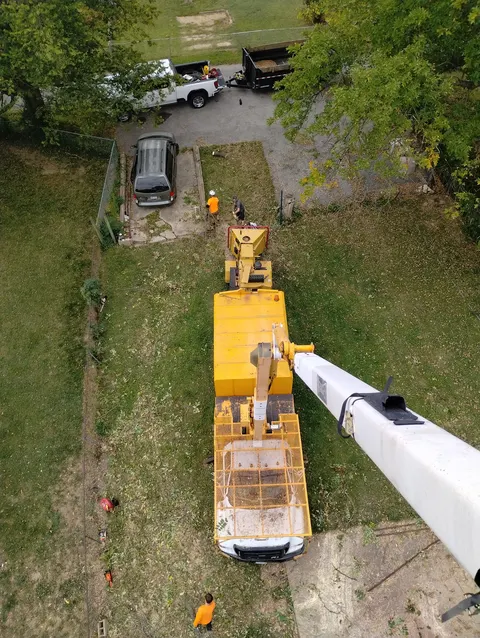
Large Tree Removal
- Crane & heavy equipment
- 60'+ tree specialists
- Complex removal experts
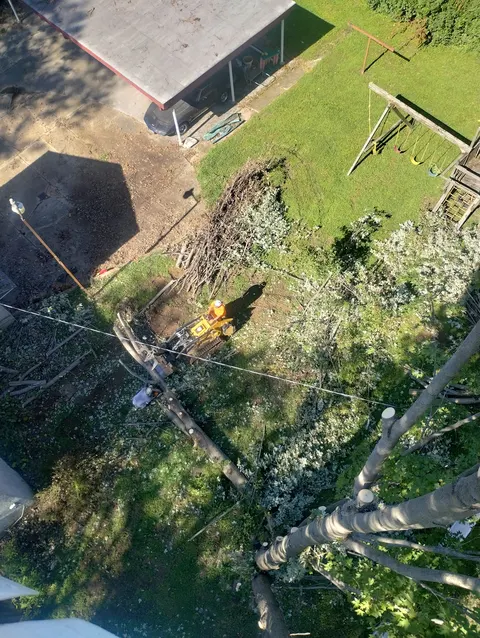
Tree Trimming & Pruning
- Crown thinning & shaping
- Deadwood removal
- Health & aesthetic pruning
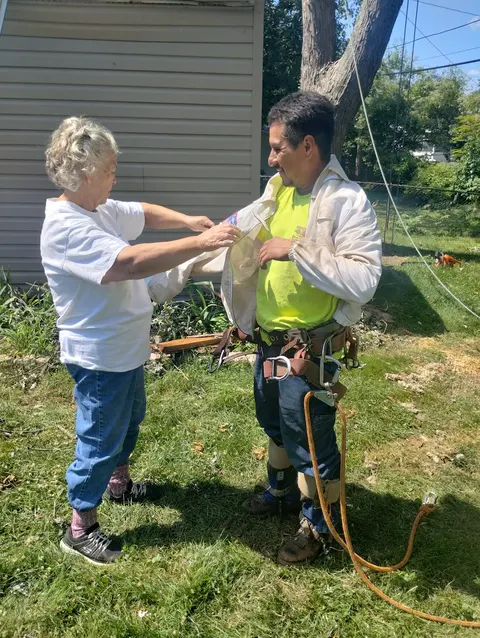
Certified Arborist
- Tree health assessments
- Disease & pest diagnosis
- ISA-certified expertise