"How much is this going to cost?" is the first question nearly every St. Louis homeowner asks before calling a tree company, and the honest answer is that trimming prices vary more than most people expect. Two oaks that look similar from the sidewalk can carry very different quotes once a crew considers how high the limbs are, what is underneath them, and how much wood has to come down. Thompson Tree Care and Landscaping has provided tree trimming and pruning throughout the St. Louis metro since 2014, and this guide lays out the typical price ranges, what pushes a quote up or down, and how to get an accurate estimate before anyone climbs your tree.
How much does tree trimming cost in St. Louis?
Tree height is the single biggest cost driver, because taller trees mean longer climbs, heavier limbs to rig down, and more time on site. Here are typical St. Louis-area ranges for a standard trim that removes dead wood, thins the canopy, and clears limbs from roofs or walkways:
Small Trees (Under 30 Feet)
Typical range: $150-$450
Dogwoods, redbuds, crabapples, Japanese maples, and young shade trees fall here. Most of the work can be done from the ground or a short ladder with pole saws, so a two-person crew is often finished in an hour or two. If several small ornamentals need shaping on the same visit, the per-tree price usually drops.
Medium Trees (30-60 Feet)
Typical range: $300-$900
This is where most mature residential trees in St. Louis neighborhoods land: maples, pin oaks, sweetgums, ashes, and older elms. Trimming these requires a climber or bucket truck, rope-and-pulley rigging for limbs over structures, and a larger crew for cleanup. Expect half a day on site for a thorough job.
Large Trees (Over 60 Feet)
Typical range: $800-$2,000+
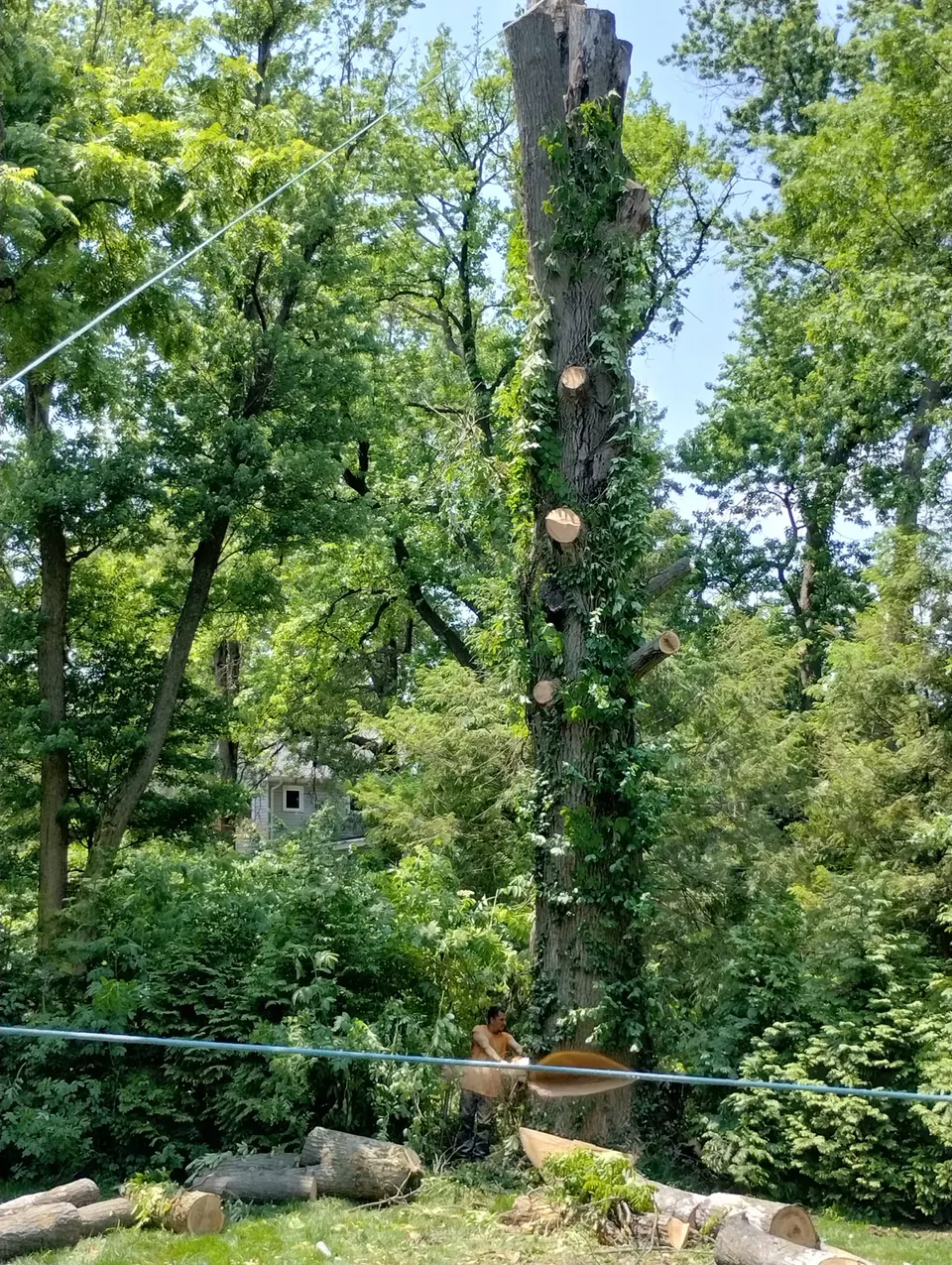
Towering white oaks, sycamores, cottonwoods, and old silver maples can reach 80 to 100 feet. Trimming them safely means experienced climbers, careful sectional rigging, and sometimes a crane or lift. When a tree this size overhangs a house, a garage, or power lines, the quote will sit at the upper end because every cut has to be controlled from the moment it is made until it reaches the ground. For very large specimens, our large tree crew handles both heavy trimming and removal.
Every one of these numbers is a general range, not a Thompson Tree Care's price list. Our estimates are free and specific to the tree in front of us, which is the only way to quote trimming accurately.
What makes tree trimming more expensive?
If two neighbors with similar-looking trees get different quotes, one of these factors is almost always the reason:
- Height and reach — Every additional 10 feet adds climbing time, rigging complexity, and risk. Limbs that cannot be reached from a bucket truck must be climbed.
- Species and canopy density — Dense, fast-growing trees such as silver maples, Bradford pears, and sweetgums produce far more brush per cut than an open-canopied oak. More brush means more chipping and hauling.
- Access — A front-yard tree that a bucket truck can park beside is the easiest scenario. A backyard tree behind a narrow gate, a pool, or a landscaped bed means climbing by hand and carrying every branch out by wheelbarrow.
- Proximity to the house, fences, and power lines — Limbs hanging over a roof or a neighbor's fence must be roped and lowered piece by piece instead of dropped. Anything near service lines requires extra caution and sometimes coordination with the utility.
- Tree condition — Dead, cracked, or decayed limbs are unpredictable and take longer to remove safely. Hollow or rotting trunks may not support a climber at all, changing the whole approach.
- Cleanup and haul-away — Chipping brush, hauling logs, and raking the lawn add labor. Quotes that skip this step look cheaper but leave you with a pile in the yard.
- How long it has been — A tree that has not been trimmed in 10 or 15 years needs far more work than one on a regular cycle. Neglect is the most expensive schedule of all.
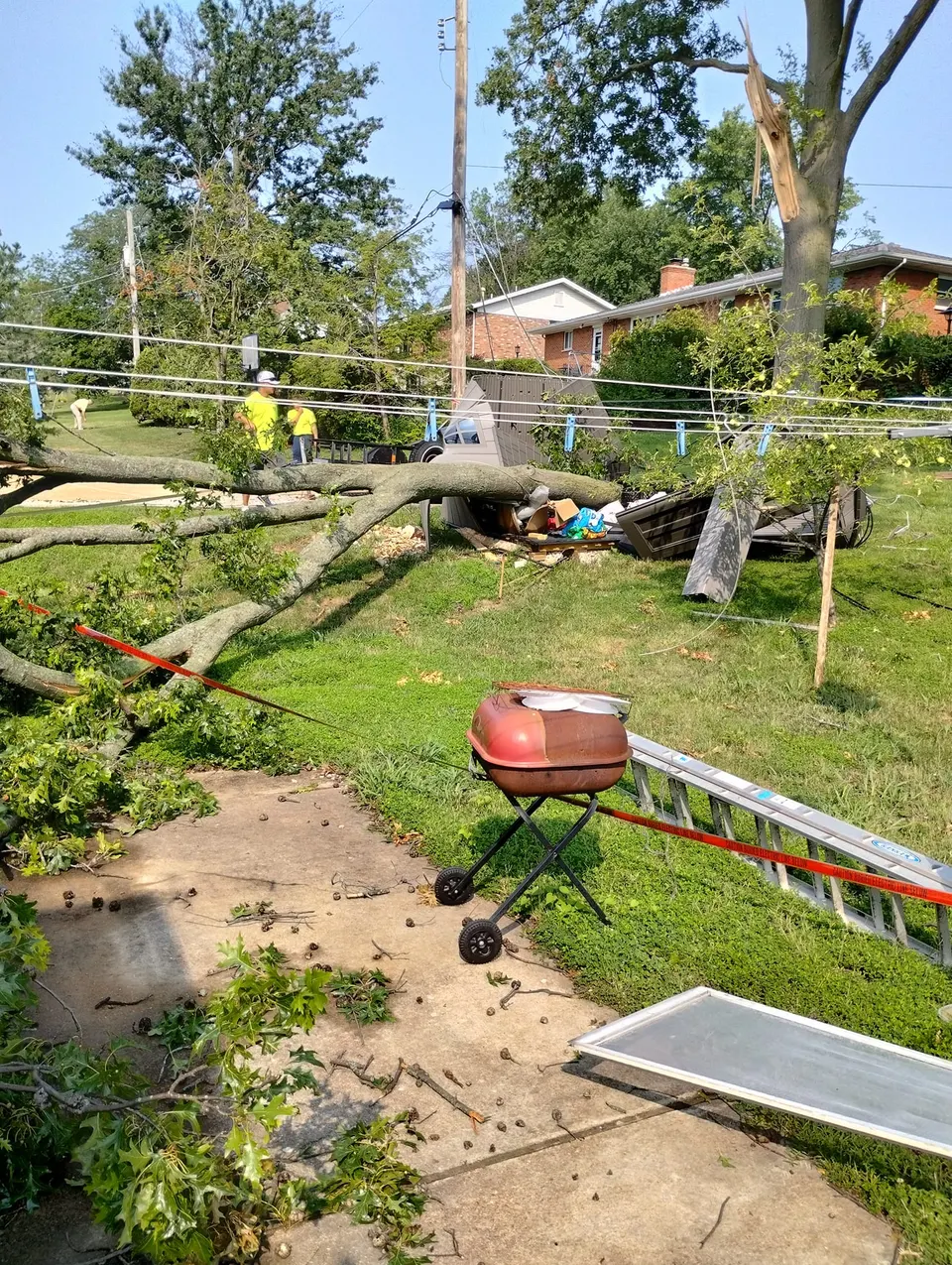
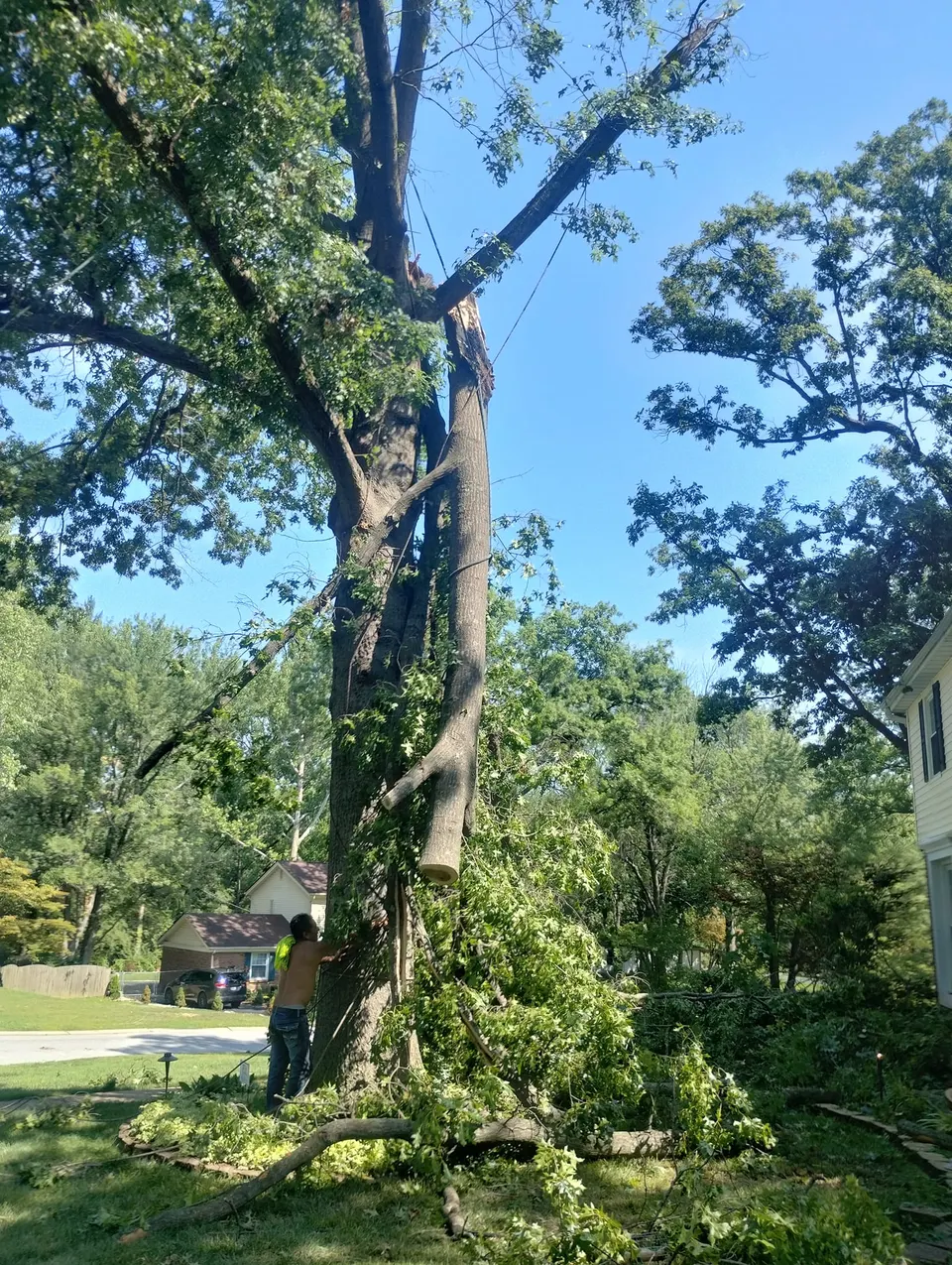
Storm-damaged trees deserve a separate note. When a limb has already split or is hanging over a structure, the job shifts from routine trimming to hazard work, and urgent after-hours response carries a premium. If you are unsure whether the tree can be saved, our guide to signs a tree is dead or dying walks through what to look for.
Trimming vs. pruning vs. topping: what are you paying for?
Tree companies use these words loosely, so it helps to know what a quote actually covers:
- Trimming is the general term for cutting back growth, clearing limbs from roofs and sightlines, and reducing overall size. It is what most homeowners request.
- Pruning is more selective and focused on tree health: removing dead, diseased, crossing, or structurally weak limbs so the tree grows stronger. Crown thinning, crown raising, and deadwooding are all pruning tasks a certified arborist plans around the species and season.
- Topping is cutting the top out of a tree to shorten it quickly. It is the cheapest-looking option and the worst thing you can do to a mature tree. Topping leaves large open wounds, triggers weak, fast-growing sprouts, invites decay, and usually creates a hazard within a few years. Thompson Tree Care does not top trees and neither should any reputable company in St. Louis.
Proper pruning often costs a little more per visit than a quick hack-back because it takes judgment and cleaner cuts, but it extends the life of the tree and reduces how much work is needed next time.
Is it cheaper to trim a tree or remove it?
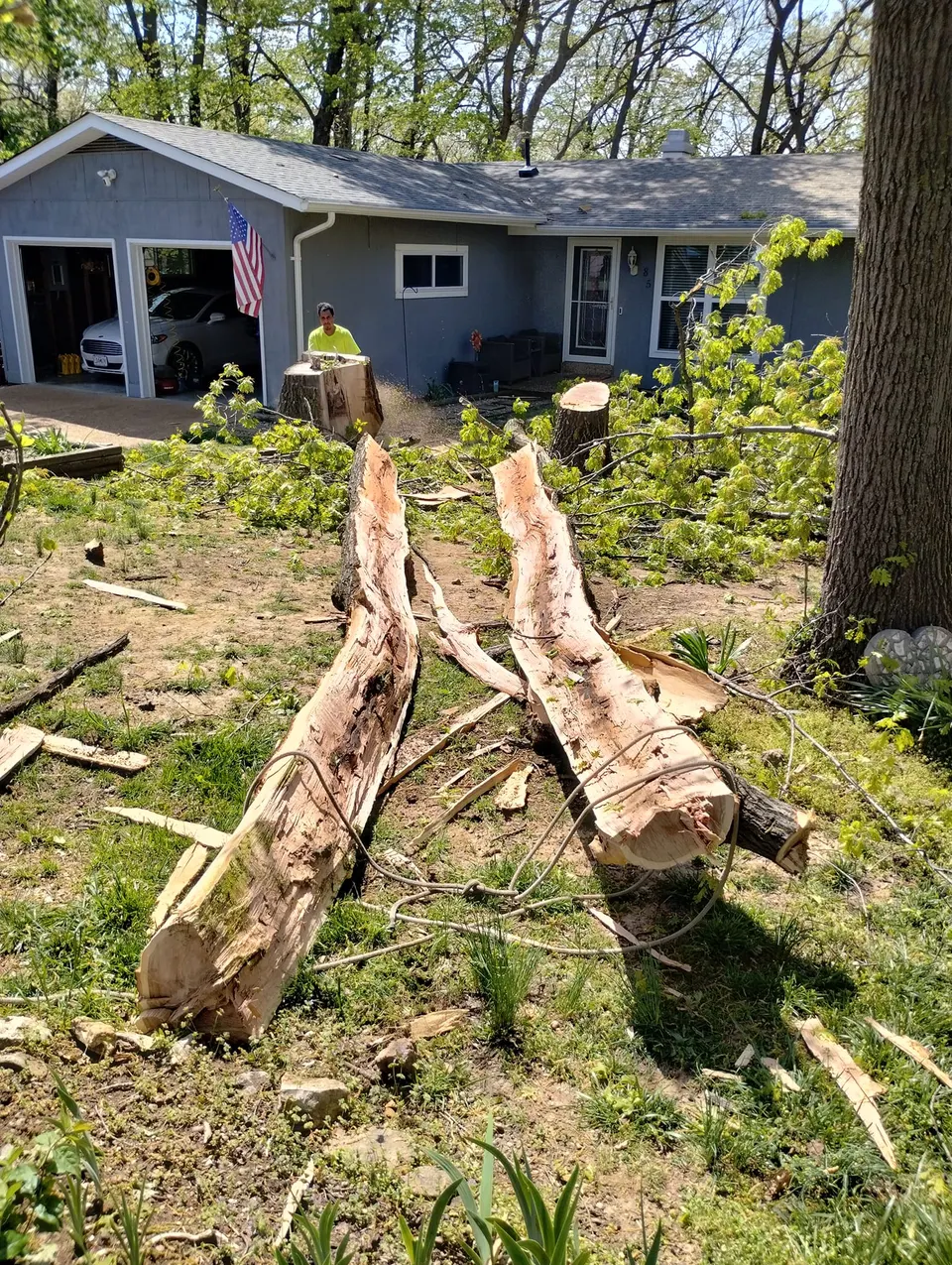
For a healthy tree, trimming is almost always the cheaper option. Removing the same tree means cutting everything to the ground, hauling the entire trunk, and usually grinding the stump, so tree removal in St. Louis typically runs $300-$2,500 or more, several times a standard trim.
The math changes when a tree is in decline. If a large tree needs hazard pruning every year, has significant trunk decay, or is dropping limbs onto the house, paying for repeated trims only delays the inevitable. In those cases, one tree removal is often less expensive over five years than ongoing maintenance, and considerably safer. A free on-site estimate is the right way to compare both options for your specific tree.
How can you save money on tree trimming?
- Schedule in the off-season. Late fall and winter are slower for St. Louis tree crews, and dormant-season pruning is actually better for most deciduous species. Our article on the best time of year to trim trees in Missouri covers the timing for each type.
- Bundle the work. Having several trees trimmed on one visit spreads the crew's travel and setup across the whole job. Adding a stump grind or small removal while the equipment is already on site is usually cheaper than a separate trip.
- Stay on a regular cycle. A light trim every 3-5 years costs less each time than a major reduction after a decade of growth, and it keeps the tree healthier.
- Ask about discounts. Thompson Tree Care offers senior and veteran discounts on trimming and removal work throughout the St. Louis metro.
- Do not wait for a storm. Overextended limbs over a roof are far cheaper to trim on a calm Tuesday than to remove from the shingles after a summer thunderstorm.
What should a tree trimming quote include?
Always get the estimate in person. Photos and phone descriptions miss the details that determine price: how the limbs are attached, what is underneath them, and how the crew can access the tree. A complete written quote should spell out:
- Which trees are included and what work is planned for each (deadwooding, thinning, raising, clearance from the house)
- Whether cleanup, chipping, and haul-away are included
- Proof of liability insurance and workers' compensation coverage
- How limbs over structures or lines will be lowered
- The expected timeline and whether the price is firm
Thompson Tree Care and Landscaping has been trimming and removing trees across St. Louis, Kirkwood, Chesterfield, Florissant, O'Fallon, and Belleville since 2014, with more than 500 jobs completed and a 4.8-star Google rating from 60+ reviews. We are licensed and insured, estimates are always free, and we will tell you plainly whether a tree needs a trim, a proper pruning, or something more. Call (314) 712-3035 or request an estimate online to get a real number for your tree.
Frequently Asked Questions
Typical St. Louis-area tree trimming ranges from $150-$450 for small trees under 30 feet, $300-$900 for medium trees 30-60 feet, and $800-$2,000 or more for large trees over 60 feet. Height, canopy density, access, tree condition, and cleanup all affect the final price. Thompson Tree Care provides free, job-specific estimates.
Usually, yes. Trimming a healthy tree typically costs a fraction of removing it, since the crew keeps the tree standing and only removes selected limbs. Removal in St. Louis generally runs $300-$2,500 or more. However, if a tree is dead, badly decayed, or needs major trimming every year, removal can be the more economical long-term choice.
Most mature shade trees in the St. Louis area do well with a professional trim every 3-5 years. Young trees benefit from light structural pruning every 2-3 years, and fruit or ornamental trees are often pruned annually. Regular trimming keeps each visit smaller and less expensive than a one-time heavy cut after years of neglect.
It should, but always confirm before work starts. A complete quote includes cutting, lowering limbs safely, chipping or hauling branches, and raking the work area. Some low quotes leave brush behind for the homeowner. Thompson Tree Care includes cleanup in every trimming estimate so there are no surprises.