If you're planning to remove a tree from your Saint Louis property, one of your first questions is probably, "What will this cost?" The answer isn't simple—tree removal pricing depends on a combination of factors, and no two jobs are exactly alike. Thompson Tree Care and Landscaping has been providing transparent, competitive tree removal services in the Saint Louis metro for more than a decade. This guide breaks down the pricing factors, typical cost ranges, and what you should expect when you request a quote.
Tree Size: The Biggest Pricing Factor
Tree height and trunk diameter are the primary drivers of removal cost. Larger trees require more labor, heavier equipment, and more time to remove safely. Here's a general breakdown for Saint Louis area pricing:
Small Trees (Under 30 Feet)
Cost: $300-$700
Small ornamental trees, young maples, dogwoods, and redbuds fall into this category. These removals are straightforward—usually completed in a few hours with basic equipment. Stump grinding may cost an additional $100-$150.
Medium Trees (30-60 Feet)
Cost: $700-$1,500
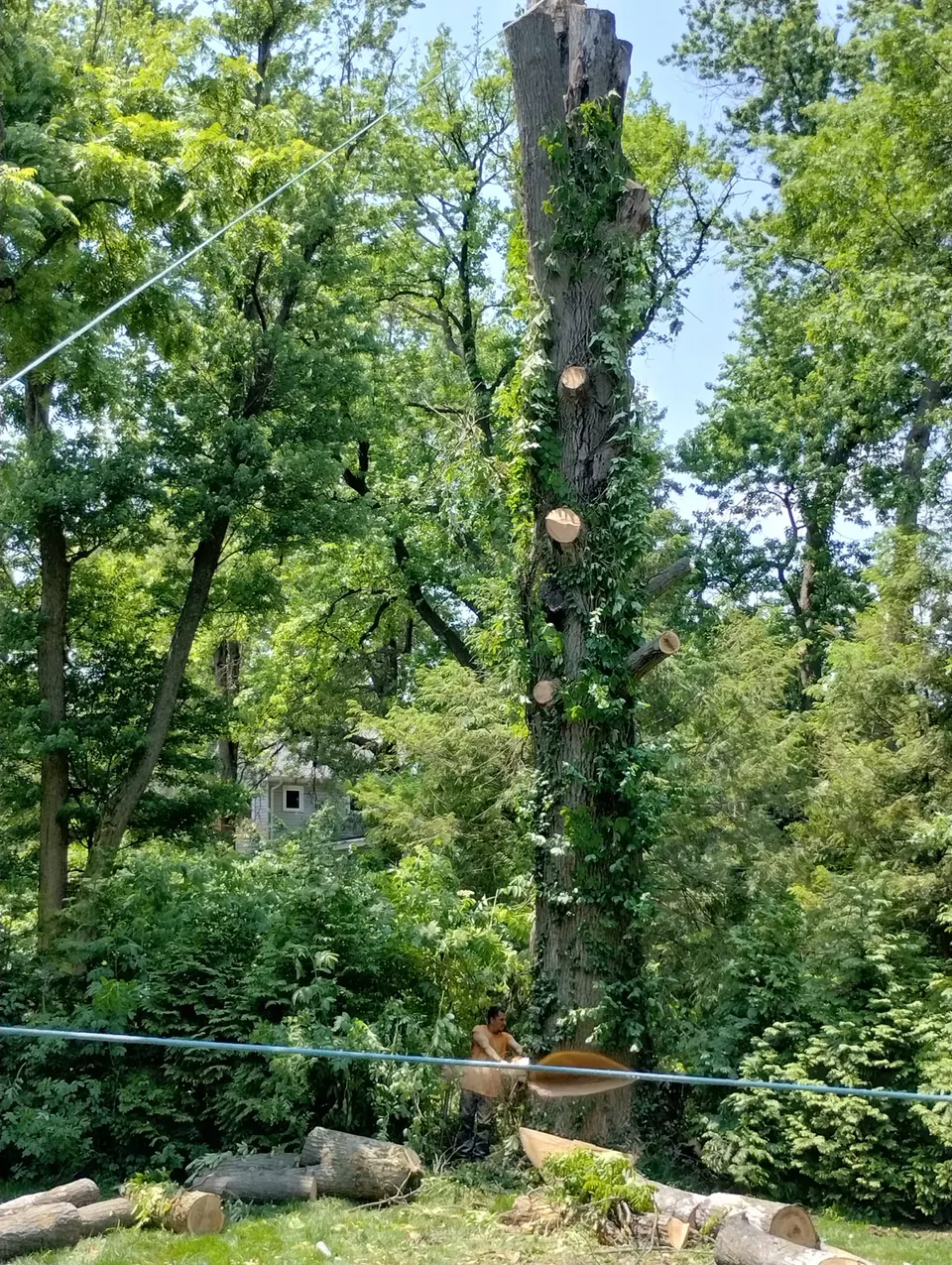
Most mature residential shade trees (oaks, maples, ashes, elms) in this height range require sectional cutting—climbing the tree and removing limbs in controlled pieces. Expect a full day's work and a multi-person crew. Stump grinding adds $150-$300.
Large Trees (Over 60 Feet)
Cost: $1,500-$2,500+
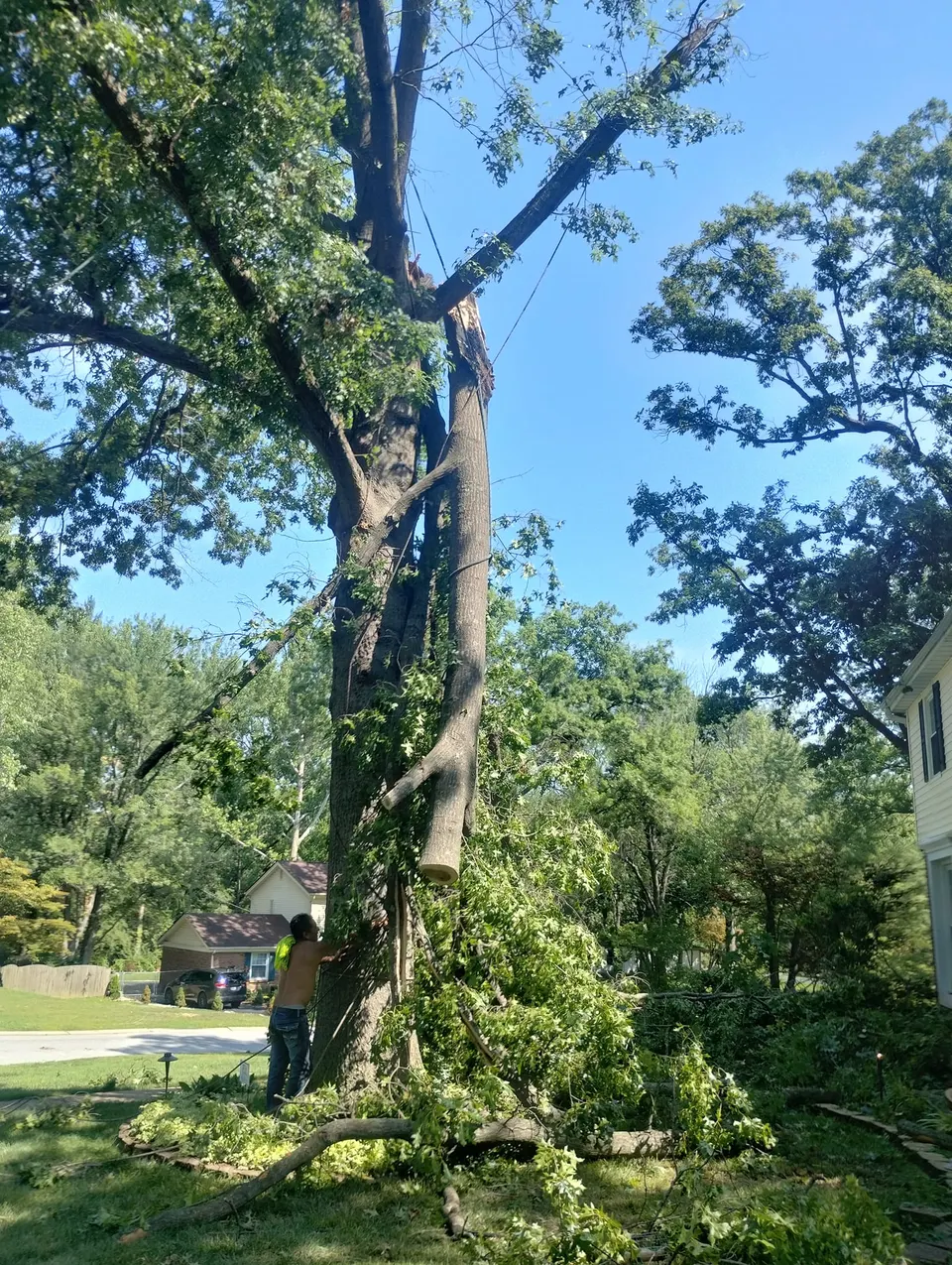
Large mature oaks, sycamores, and cottonwoods often exceed 80 feet and require crane-assisted removal or complex rigging. These jobs can take 1-2 days and involve significant labor and equipment costs. Stump grinding for large stumps can add $300-$500.
Location and Accessibility
A tree in an open front yard with no obstacles is much easier—and cheaper—to remove than a tree wedged between your house and a fence line. Accessibility affects both equipment choices and labor time:
- Front yard, open space — Easiest access. Equipment can be positioned freely. Lower cost.
- Backyard with gate access — Slightly more complex. Smaller equipment may be required. Moderate cost increase.
- Backyard with no gate access — All equipment and debris must be carried through the house or around obstacles. Significant labor increase. Higher cost.
- Near structures, power lines, or fences — Requires precise rigging and sectional removal to avoid damage. Higher cost due to complexity and risk.
If your tree is in a particularly tight spot or poses hazards to structures or utilities, you may need dangerous tree removal specialists. These jobs require advanced rigging, climbing expertise, and sometimes crane assistance—all of which increase cost.
Tree Condition and Hazards
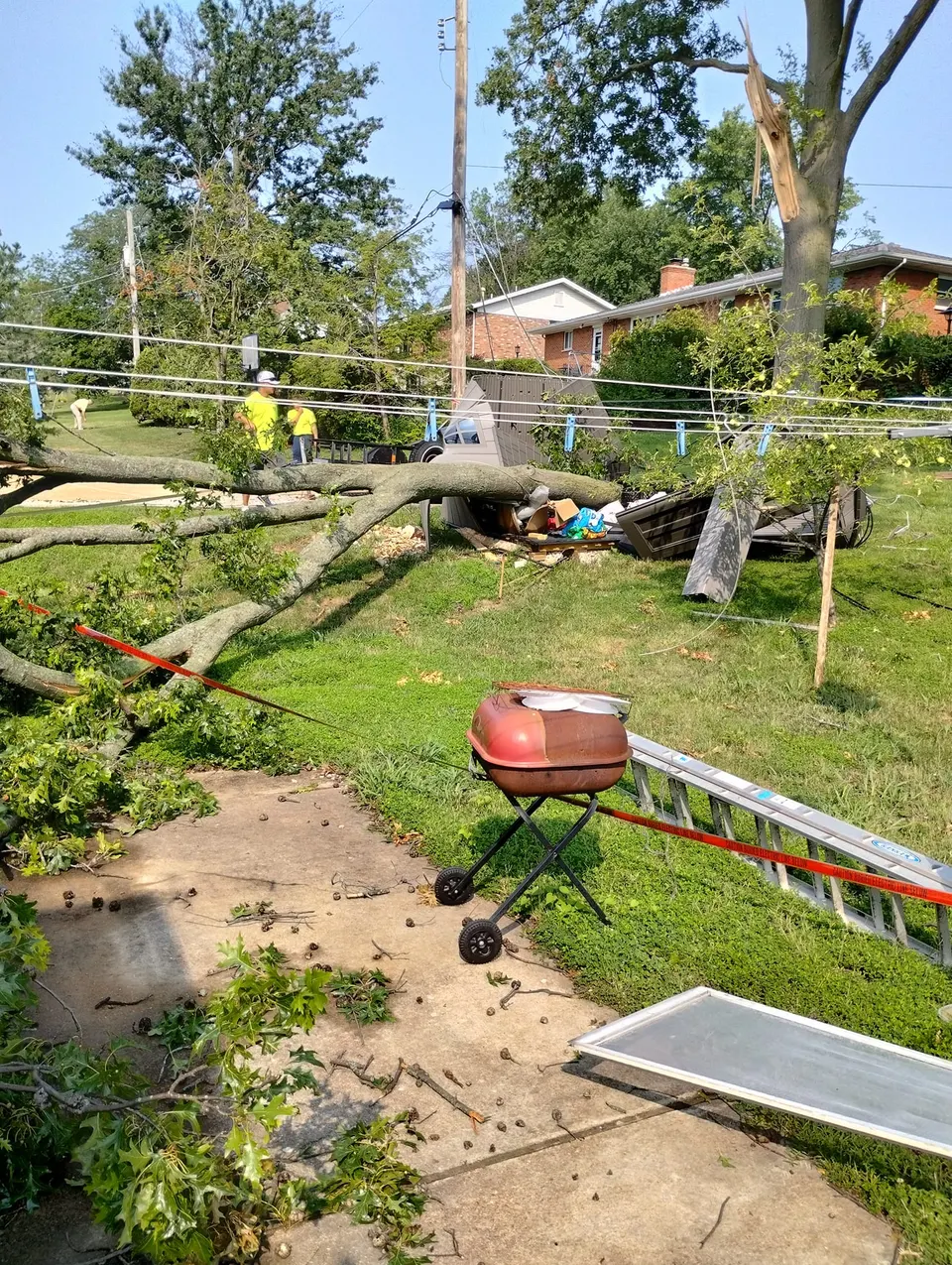
A healthy tree is easier to remove than a dead, decayed, or storm-damaged tree. Dead trees are unpredictable—branches can snap without warning, trunks can split during cutting, and the structural integrity is compromised. This increases risk and requires extra safety precautions, which add to labor costs.
If the tree is leaning dangerously, has a split trunk, or is actively falling, it qualifies as an emergency removal. Emergency tree service often carries a premium (typically 1.5x-2x standard rates) due to the urgency, after-hours work, and increased hazard.
For help identifying whether your tree is hazardous, read our guide on when to remove a tree.
Permit Requirements in Saint Louis
Some municipalities require permits to remove trees, especially if they're over a certain size, on public property, or part of a protected species list. Permit requirements vary across the Saint Louis metro:
- City of Saint Louis — Permits required for trees on public property or in the right-of-way. Certain protected species may require approval even on private property.
- St. Charles County — No permit required for most private-property removals, but check local ordinances if removing trees near public roads.
- Chesterfield, Ballwin, Kirkwood — Varying rules depending on tree size and location. Some municipalities require notification or approval before removing large trees.
Your tree removal company should be familiar with local regulations and can advise whether a permit is needed. Permit fees in the Saint Louis area typically range from $50-$150 when required. Removing a tree without a required permit can result in fines, so it's worth checking first.
Stump Grinding: A Separate Cost
Most tree removal quotes do not include stump grinding unless explicitly stated. Grinding the stump is usually a separate service billed by stump diameter:
- Small stumps (under 12 inches) — $100-$150
- Medium stumps (12-24 inches) — $150-$300
- Large stumps (over 24 inches) — $300-$500+
Many companies offer discounted stump grinding when bundled with tree removal. If you don't need the stump removed immediately, you can leave it in place and grind it later—or opt for full stump removal if you're replanting in the same spot. For more on this decision, see our article comparing stump grinding vs. stump removal.
Debris Removal and Cleanup
Professional tree removal includes cutting the tree down, but what happens to the wood? Most companies offer several options:
- Haul away — The crew removes all wood, branches, and debris from your property. This is usually included in the quoted price.
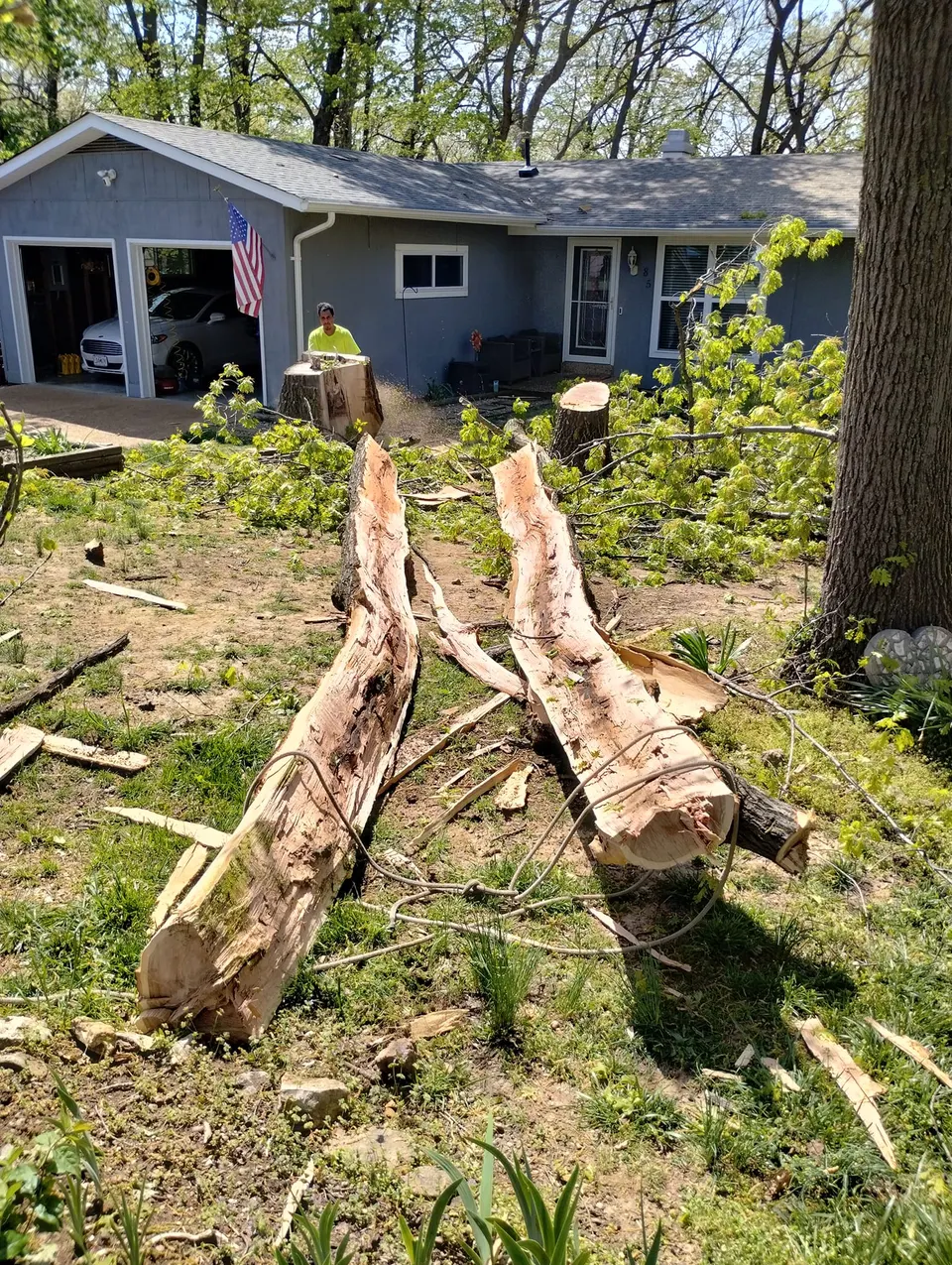
- Leave logs on-site — If you want firewood, you can request that the crew leave logs cut to a specific length. This may reduce the overall cost slightly.
- Chip and mulch — Branches are chipped on-site, and you can keep the mulch for landscaping. This is often included at no extra charge.
Always confirm what's included in your quote. Some budget tree services quote low prices but don't include cleanup—you'll be left with a massive pile of brush to deal with yourself.
Will Insurance Cover Tree Removal?
Homeowner's insurance typically covers tree removal only if the tree fell due to a covered event (storm, lightning, wind) and damaged a structure—your home, garage, fence, or driveway. In these cases, the removal cost is usually bundled into the overall damage claim.
However, insurance generally does NOT cover:
- Preventative removal of hazardous but still-standing trees
- Trees that fell in your yard without damaging structures
- Trees removed for landscaping or aesthetic reasons
- Removal of dead trees unless they caused covered damage
If you've experienced storm damage and need emergency removal, document the scene with photos before cleanup begins and contact your insurer immediately. For step-by-step guidance, read our article on storm damage emergency response.
How to Get Accurate Quotes
Always request on-site estimates from at least two or three companies. Over-the-phone or photo-based quotes are rarely accurate—tree removal pricing depends on details that can only be assessed in person.
What to Ask When Requesting a Quote
- Is stump grinding included, or is it a separate charge?
- Does the price include debris removal and cleanup?
- Are you fully insured (liability and workers' compensation)?
- Do you have references or reviews from recent Saint Louis-area customers?
- Will you handle permit applications if required?
- What is your timeline for completing the work?
Thompson Tree Care provides free, no-obligation on-site estimates throughout the Saint Louis metro. We'll assess your tree, explain our approach, and provide a transparent quote with no hidden fees. Call (314) 712-3035 to schedule your free estimate.
Ways to Save on Tree Removal
Tree removal isn't cheap, but there are ways to reduce costs without compromising safety or quality:
- Bundle multiple removals — Removing several trees in one visit reduces mobilization and setup costs. Many companies offer volume discounts.
- Schedule during off-season — Tree services are busiest in spring and summer. Scheduling removal in late fall or winter can sometimes result in lower pricing.
- Keep firewood logs — If you have a fireplace or know someone who does, keeping the logs on-site can reduce disposal costs.
- Skip stump grinding initially — If you're on a tight budget, you can grind the stump later when finances allow.
- Avoid emergency pricing — If a tree is hazardous but not yet an immediate threat, schedule removal before it becomes an emergency. Emergency rates are significantly higher.
Frequently Asked Questions
Tree removal in Saint Louis typically ranges from $300 to $2,500 for most residential jobs. Small trees (under 30 feet) cost $300-$700, medium trees (30-60 feet) cost $700-$1,500, and large trees (over 60 feet) cost $1,500-$2,500 or more. Hazardous removals, difficult access, or emergency service increase costs.
Yes, stump grinding is usually a separate service. In Saint Louis, stump grinding typically costs $100-$400 per stump depending on diameter. Many tree removal companies offer discounted stump grinding when bundled with tree removal. Leaving the stump in place is an option if you don't need the area cleared immediately.
It depends on the tree's location and size. In the City of Saint Louis, permits are required to remove certain protected species or trees over a specific diameter on public property or right-of-way. Suburban municipalities (St. Charles, Chesterfield, Ballwin) have varying rules. Your tree service company can advise on local permit requirements.
Homeowner's insurance usually covers tree removal if the tree fell due to a covered event (storm, lightning) and damaged a structure (home, garage, fence). Removal of a healthy tree or a tree that fell without damaging property is typically not covered. Emergency removals for hazardous trees are also generally not covered unless damage occurred.