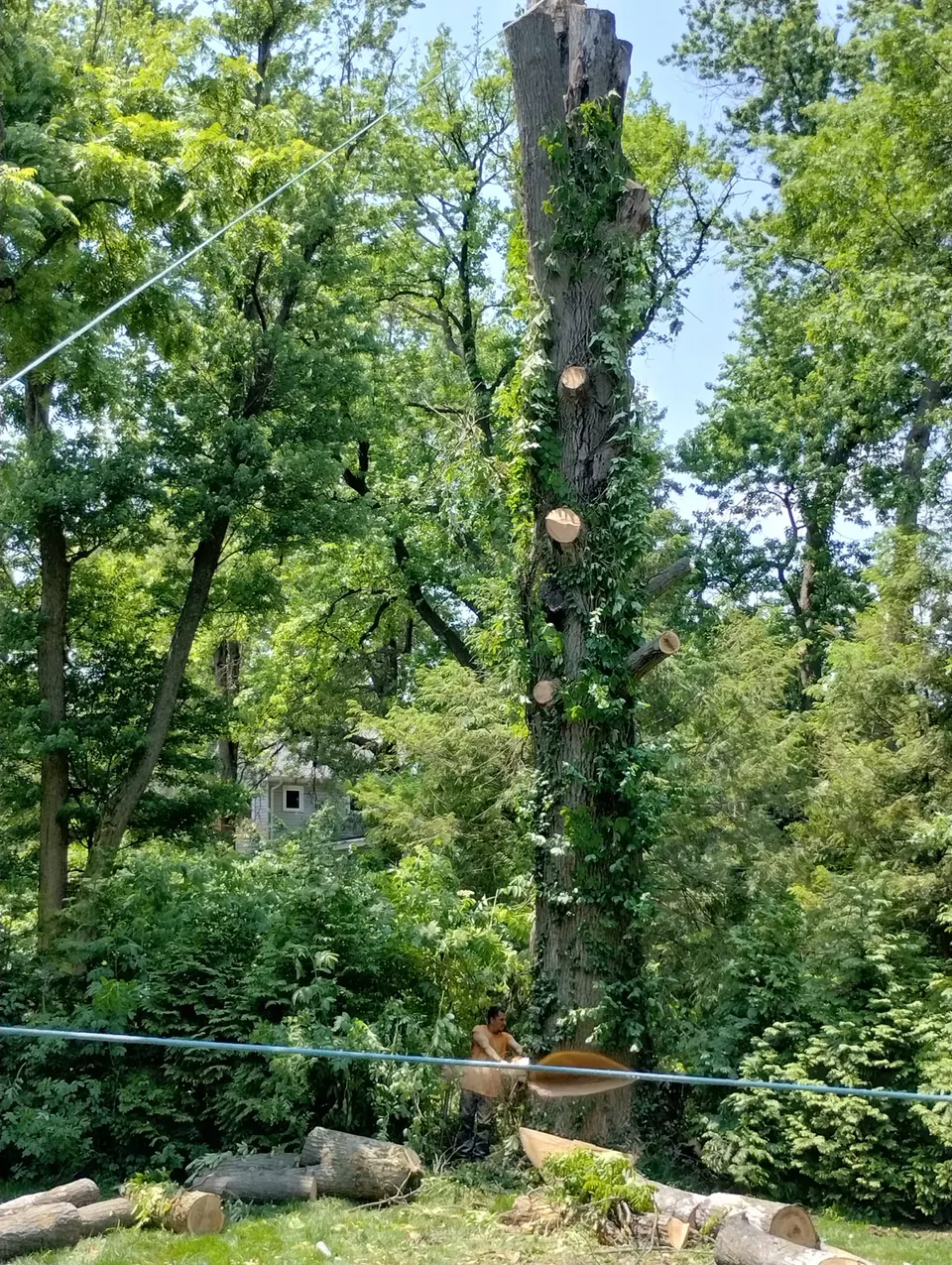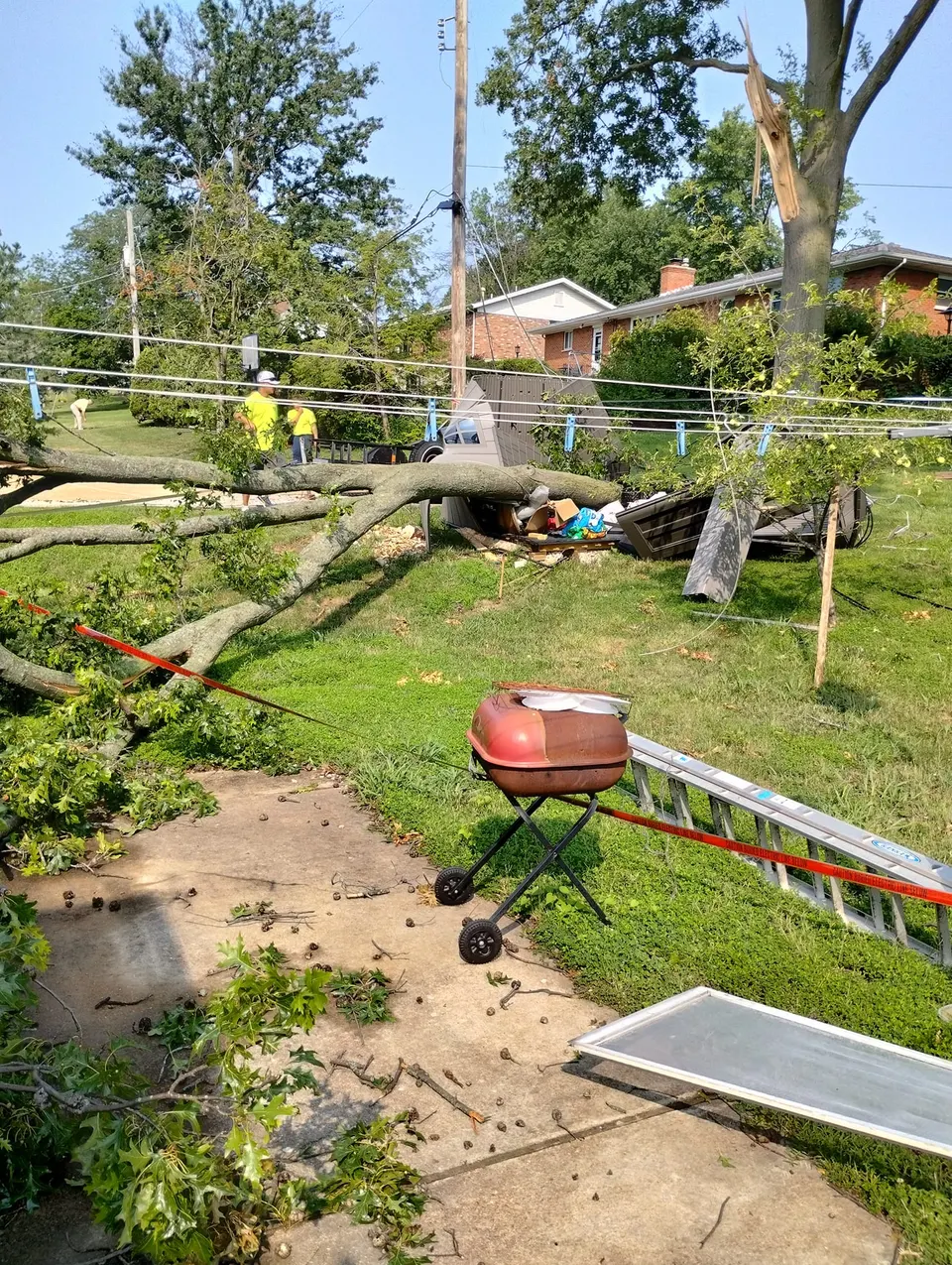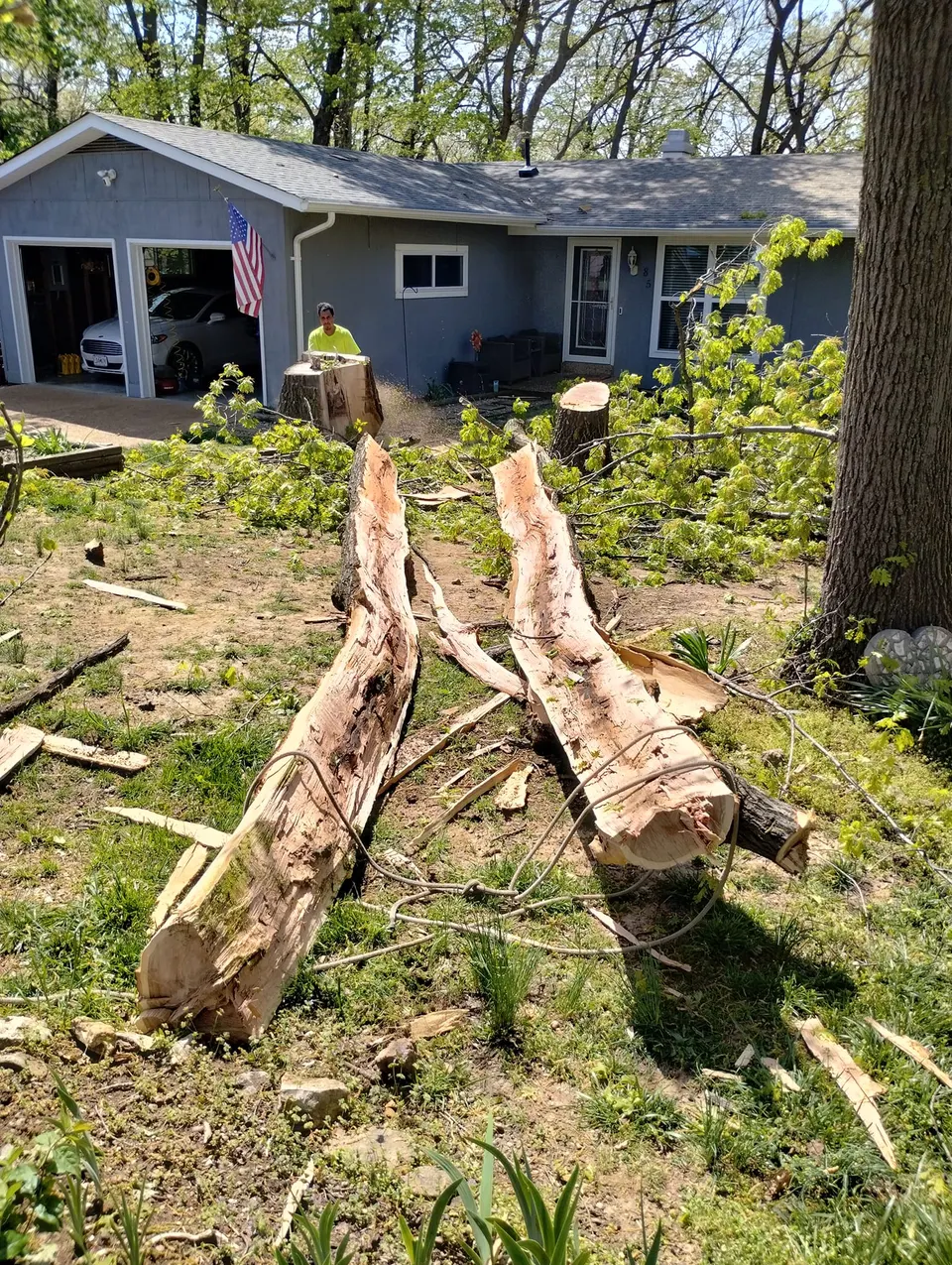
"Do I need a permit to take this tree down?" is one of the most common questions Thompson Tree Care and Landscaping hears on estimates, and the honest answer is: it depends on where the tree is standing, which of the region's many cities you live in, and who actually owns the ground it grows in. The St. Louis metro is a patchwork of the City of St. Louis, unincorporated St. Louis County, roughly ninety county municipalities, St. Charles County, and the Illinois Metro East, and each writes its own rules. This guide explains the pattern that holds across almost all of them, the situations that nearly always need permission, and how we handle it before a crew ever shows up. It is general information, not legal advice; the final word always comes from your own municipality's code or a call to city hall.
Does the City of St. Louis require a tree removal permit?
For a tree growing on your own lot inside the city limits, a permit is generally not required. You own the tree, and removing a dead, hazardous, or simply unwanted tree from your yard is your decision. The exceptions are trees tied to a construction or demolition project and properties inside historic districts, where site changes can be reviewed; if either applies to you, confirm with the city before scheduling.
Street trees are a different matter. The City of St. Louis manages the trees along its streets through its Forestry Division, and those trees may not be removed, topped, or heavily pruned without the city's authorization, even by the homeowner whose house they front. Cutting one down on your own can lead to fines and a requirement to replace the tree.
How do you tell whether a tree is a street tree? Look at where it stands:
- Between the sidewalk and the curb (the "tree lawn" or "parkway"): almost always city-owned, no matter who mows it.
- On the house side of the sidewalk: usually yours. On streets with no sidewalk, the public right-of-way typically still extends several feet past the edge of the pavement, so a tree right at the roadside can still be public.
- Unsure: your property survey or the city's parcel map shows the right-of-way line. When in doubt, ask the Forestry Division; a dead or dangerous street tree is something they want to know about anyway.
What about St. Louis County and its municipalities?
Here is where "it depends" earns its keep. St. Louis County contains both unincorporated areas, governed by the county's own code, and roughly ninety separate municipalities, from Kirkwood, Webster Groves, and Clayton to Florissant, Chesterfield, and Ladue, each with its own ordinances. The general pattern:
- Most municipalities do not require a permit to remove a tree on an existing residential lot, but nearly all of them protect their street trees and regulate tree removal on lots being subdivided or built on.
- Some municipalities have tree-preservation ordinances that regulate the removal of larger trees on private property. Ladue and Town and Country are the examples most often cited, and other cities have adopted or tightened rules over the years. These ordinances typically define a "significant" or "heritage" tree by trunk size, require an application before it is removed, and may require replacement plantings. Because the thresholds and procedures vary and change, we will not quote specific numbers here; read your city's code or call city hall.
- Construction changes everything. Even in cities with no rules for existing homes, tree removal tied to new construction, additions, or lot clearing is usually reviewed as part of the building or grading permit.
- Homeowners associations are a separate layer. Recorded subdivision indentures can restrict tree removal regardless of what the city allows. A removal can be perfectly legal with the municipality and still violate your covenants, so check with your trustees.
The takeaway for county residents: assume nothing based on what a neighbor in the next town did. Two houses a mile apart can sit in different municipalities with different rules.
What about Belleville and the Metro East?
Across the river the pattern is the same. In Belleville, Fairview Heights, O'Fallon (Illinois), Collinsville, and Edwardsville, a tree on your own residential lot can generally be removed without a permit, while parkway trees along the street are city property and require the city's authorization. As on the Missouri side, the exceptions are trees involved in construction and subdivision projects and any local tree ordinance your particular city has adopted. Illinois cities tend to be responsive about dead parkway trees, and some will remove a hazardous one at their own expense once it is reported, so it is worth a call before you pay for removal of a tree that may not be yours to remove.
Which situations almost always need permission?
Wherever you live in the metro, these five cases should send you to the phone before the chainsaw:
- Street and parkway trees. City-owned, city-authorized, no exceptions.
- Trees in easements or near utility lines. A tree tangled in Ameren's primary lines is not a do-it-yourself job for anyone, and utility easements often carry their own rules about what can be cut and by whom. We coordinate with the utility on dangerous tree removals near power lines and will tell you when Ameren has to clear the lines first.
- Trees protected by a municipal ordinance. If your city defines significant or heritage trees, a large healthy tree on your lot may need an application even though it is entirely yours.
- Trees on a lot under development. Additions, new garages, pools, and lot clearing are reviewed with the building permit, and many cities require a tree survey and replacement plan.
- Historic districts. Local historic districts in the City of St. Louis and in older municipalities can review changes to a property's site, including mature trees.
Outside those five, an ordinary residential removal is usually yours to schedule as you see fit. If the tree is dead, cracked, leaning, or hollow, do not let uncertainty about paperwork delay a safety decision; our guide to the signs a tree is dead or dying covers what warrants urgency, and a hazardous tree is the case cities approve fastest where approval is needed at all.
What happens if you remove a tree without a required permit?
The consequences are set by each municipality, but they follow a familiar shape. Cities typically issue a fine per tree, and in ordinance towns the fine can scale with the size of the tree that was lost. Most also require replacement: either planting new trees on the property, sometimes several for each one removed, or paying into a city tree fund. Removing a city street tree can additionally bring a bill for the appraised value of the tree, which for a mature shade tree can run into the thousands. Contractors who cut protected trees can lose their municipal business license. None of this is worth the two phone calls it takes to check first.
How does a tree service handle permits?
Before Thompson Tree Care schedules a removal, we look at where the tree stands, which municipality the property is in, and whether utilities, easements, or a known ordinance are involved, and we tell you plainly whether a permit, city approval, or utility coordination applies. Where a permit is required, the property owner applies for it, because the city issues it to the owner of the land, and we schedule the work once approval is in hand. Where a street tree is involved, we will point you to the right city office rather than touch a tree that is not yours.
That check is part of the free estimate. Since 2014 we have completed more than 500 jobs across St. Louis, Kirkwood, Chesterfield, Florissant, O'Fallon, and Belleville, we are licensed and insured, and we hold a 4.8-star Google rating from 60+ reviews. If you are weighing a removal because a tree is too close to the house, our certified arborist assessment can also tell you whether pruning would solve the problem without removing the tree at all.
What does a permitted removal cost?
The permit itself, where one applies, is usually a modest fee set by the city; the real cost is the removal. Typical St. Louis-area tree removal runs $300-$2,500 or more depending on the tree's size, condition, and access, and stump grinding adds roughly $100-$400 per stump. Replacement-tree requirements, where a city imposes them, are an added line item worth asking about before you commit. Every tree removal estimate from Thompson Tree Care and Landscaping is free and itemized, and we offer senior and veteran discounts. Call (314) 712-3035 or request an estimate online, and we will sort out the permit question along with the price.
Frequently Asked Questions
On your own private property, usually not, and a dead or hazardous tree is the case most municipalities are quickest to approve even where a tree-preservation ordinance applies. A dead street tree in the parkway between the sidewalk and the curb is different: it belongs to the city and only the city can authorize its removal. Confirm with your municipality before scheduling.
In nearly every St. Louis-area city, the strip between the sidewalk and the curb is public right-of-way, and the trees growing in it are city-owned street trees even though you mow around them. Removing, topping, or heavily pruning one without the city's authorization can bring fines and replacement requirements. Contact the city's forestry or public works office first.
It can, if your subdivision's recorded covenants regulate tree removal, and many newer St. Louis County and St. Charles County subdivisions do. HOA rules are a separate layer from any city permit, so a removal can be legal with the city and still violate your covenants. Check your indentures or ask the trustees before the crew arrives.
Thompson Tree Care checks the local requirements before scheduling and tells you plainly whether a permit, city approval, or utility coordination applies to your tree. Where a permit is required, the property owner applies for it, since the city issues it to the owner of the land. We schedule the removal once approval is in hand.