A tree comes down in a St. Louis thunderstorm and the first two questions are always the same: is anyone hurt, and who is paying for this? The answer to the second one depends on what the tree hit, why it fell, and how well you document the scene before the cleanup begins. This guide walks through when homeowners insurance typically covers tree removal in Missouri, what happens when a neighbor's tree lands in your yard, what you should expect to pay out of pocket, and how to build a claim that doesn't get denied. Thompson Tree Care and Landscaping has handled storm cleanup across the St. Louis metro since 2014, and we work directly with homeowners to get trees off structures safely and provide the paperwork their insurer asks for.
One caveat up front: every policy is different, and this article is general information, not legal or insurance advice. Read your declarations page and call your agent for the specifics of your coverage.
When Does Homeowners Insurance Cover Tree Removal?
Standard homeowners policies are built around "covered perils" — the specific events the insurer agrees to pay for. Wind, lightning, hail, and the weight of ice and snow are covered perils under most policies, and those are exactly the forces that bring trees down in Missouri. When one of those events pushes a tree into something the policy insures, removal is normally part of the claim.
In practice, that means insurance usually helps pay to remove a tree when it:
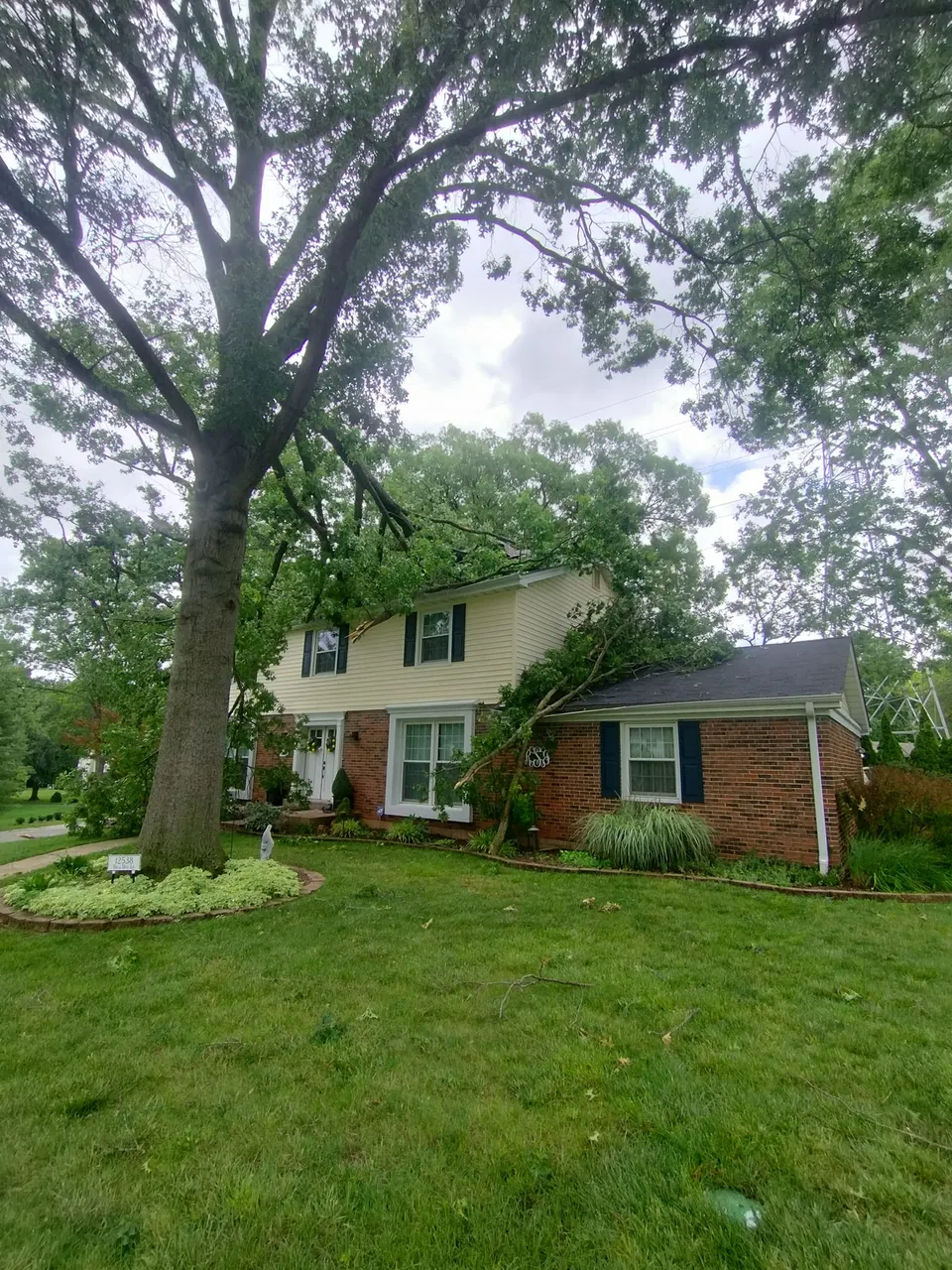
- Lands on your house or an attached structure — roof, porch, attached garage, or deck.
- Damages a detached structure — a detached garage, shed, or fence, which most policies cover under "other structures."
- Blocks your driveway so you cannot get a vehicle in or out.
- Blocks a ramp or entrance needed by a person with a disability.
The cost of removing the tree is typically bundled into the overall damage claim alongside the roof, siding, or fence repair. If the tree fell because of a covered peril and it hit something covered, you have a good starting position.
What Is Usually NOT Covered?
The same policy that pays to lift a tree off your roof will often decline to pay for a tree that simply fell over in the back corner of the lot. The gaps homeowners run into most often in the St. Louis area are:
- Trees in open yard — A tree that falls without striking a structure is generally treated as landscaping, and landscaping cleanup is either excluded or capped at a small amount.
- Preventive removal — Insurance pays for damage that already happened, not for removing a leaning or hazardous tree before it falls. That cost is yours, and it is almost always cheaper than the emergency version.
- Neglect — If the tree was visibly dead or rotting for years and the insurer can show you ignored it, the claim may be reduced or denied.
- Landscaping-only damage — A fallen tree that crushes shrubs, a garden, or a patio set usually falls under low landscaping limits rather than the full dwelling coverage.
- Flood and earth movement — Trees that fall because of flooding or a slide are typically excluded from a standard policy.
If your tree fits one of these categories, plan on paying out of pocket, and read the cost section below so the number does not surprise you.
How Much Will Insurance Actually Pay for Debris Removal?
Even when removal is covered, it is rarely unlimited. Many policies cap tree and debris removal at a set amount per tree — commonly in the $500 to $1,000 range — with a policy-wide limit for the whole event. A large oak that takes a crane to lift off a roof can cost more than that cap, and the difference comes out of your pocket along with your deductible.
Two things worth checking with your agent before storm season:
- Your deductible. If removal is a $900 job and your deductible is $1,000, a claim may not be worth filing at all.
- Any debris-removal endorsement. Some carriers sell an add-on that raises the per-tree limit, which matters on wooded lots in Kirkwood, Chesterfield, or Belleville where the trees are big and the roofs are close.
A Tree Fell on My House — What Do I Do First?
The first hour after a tree hits a home sets up the entire claim. Work through these steps in order:
- Get people out of the affected rooms. A trunk resting on rafters can shift as the wood settles or as wind continues. Don't go back in for belongings until the tree is secured.
- Stay away from downed power lines. If the tree pulled down a service drop or a line is touching the tree, treat everything as energized. Call 911 and Ameren before anyone approaches. No tree crew will start cutting until the utility clears it.
- Photograph everything before anything moves. Wide shots of the tree on the structure, close-ups of the break point or root ball, and photos of the interior damage. Timestamped phone photos are fine.
- Call your insurer and open a claim. Ask what documentation they need and whether they want an adjuster on site before removal. Most carriers will authorize emergency removal to prevent further damage, but get that authorization in writing or note the claim number and the name of the person who approved it.
- Get a written removal estimate. A reputable company will itemize the removal separately from debris hauling and any temporary repairs. Thompson Tree Care provides written estimates and itemized invoices you can attach to your claim.
- Tarp and board up. Insurers expect you to prevent further damage once the tree is off. Keep the receipts for tarps, plywood, or a contractor's emergency dry-in — those costs are commonly reimbursable.
- Keep every receipt. Removal, hauling, tarping, hotel stays if the home is unlivable. A missing receipt is the easiest way to lose money on a claim.
For more on the safety side of the first 24 hours, see our guide to storm damage tree removal after severe weather. If you need a crew on site now, our 24/7 emergency tree service covers the entire St. Louis metro.
My Neighbor's Tree Fell on My Property — Who Pays in Missouri?
This is the question that causes the most arguments over the fence, and the answer surprises most people: in general, it does not matter whose yard the tree grew in. The property owner where the damage occurred files with their own homeowners insurance. If your neighbor's healthy maple blows onto your garage in a storm, that is your claim, your deductible, and your insurer — and if your tree lands on their roof, the reverse is true.
The general exception is negligence. If the neighbor knew the tree was dead, hollow, or clearly hazardous — you sent them a letter, an arborist flagged it, the whole street could see it was dead — and they did nothing, they may be held responsible for the damage. Your insurer may pursue them (or their insurer) to recover what it paid, which is called subrogation. Proving that knowledge is the hard part, which is why documenting a hazardous tree next door before it falls matters.
A few related rules of thumb that hold in most situations:
- Overhanging branches. You can generally trim limbs that cross the property line back to the line, at your own expense, as long as you do not kill or seriously damage the tree.
- A tree that falls without hitting anything. Each owner is typically responsible for the debris on their own side of the line.
- Put concerns in writing. A dated letter or email to a neighbor about a dead tree creates the record that matters if it ever falls.
Again, this is general information rather than legal advice. Missouri property disputes can turn on details — confirm the specifics with your insurer, and with an attorney if a claim is contested.
What Does Fallen Tree Removal Cost If Insurance Won't Pay?
When the tree fell in open yard, or the claim is not worth your deductible, you are paying the bill directly. In the St. Louis area, fallen tree removal typically runs $300 to $2,500, on the same scale as a standing removal:
- Small tree in open lawn — $300 to $700. Cut, chip, and haul in a few hours.
- Medium tree on a fence or across a driveway — $700 to $1,500. Sectional cutting to free the structure without adding damage.
- Large tree on a roof or tangled in utility lines — $1,500 to $2,500 or more. Rigging, sometimes a crane, and a coordinated lift so the roof is not crushed further when the weight shifts.
Emergency and after-hours response usually carries a premium over standard rates because the crew is mobilizing outside normal hours into a hazardous situation. If the tree is down but not on anything and nobody is in danger, scheduling the removal for the next business day instead of that night is one of the easiest ways to save money. Our full breakdown of tree removal costs in St. Louis covers what drives the price up or down, and our storm damage tree removal page explains how we approach trees on structures.
How Do I Document a Claim So It Isn't Denied?
Adjusters deny or reduce tree claims for predictable reasons: no evidence of what caused the fall, no evidence of what the tree hit, or one lump-sum invoice that mixes removal with repairs the policy treats differently. Cover those three gaps and most legitimate claims go through.
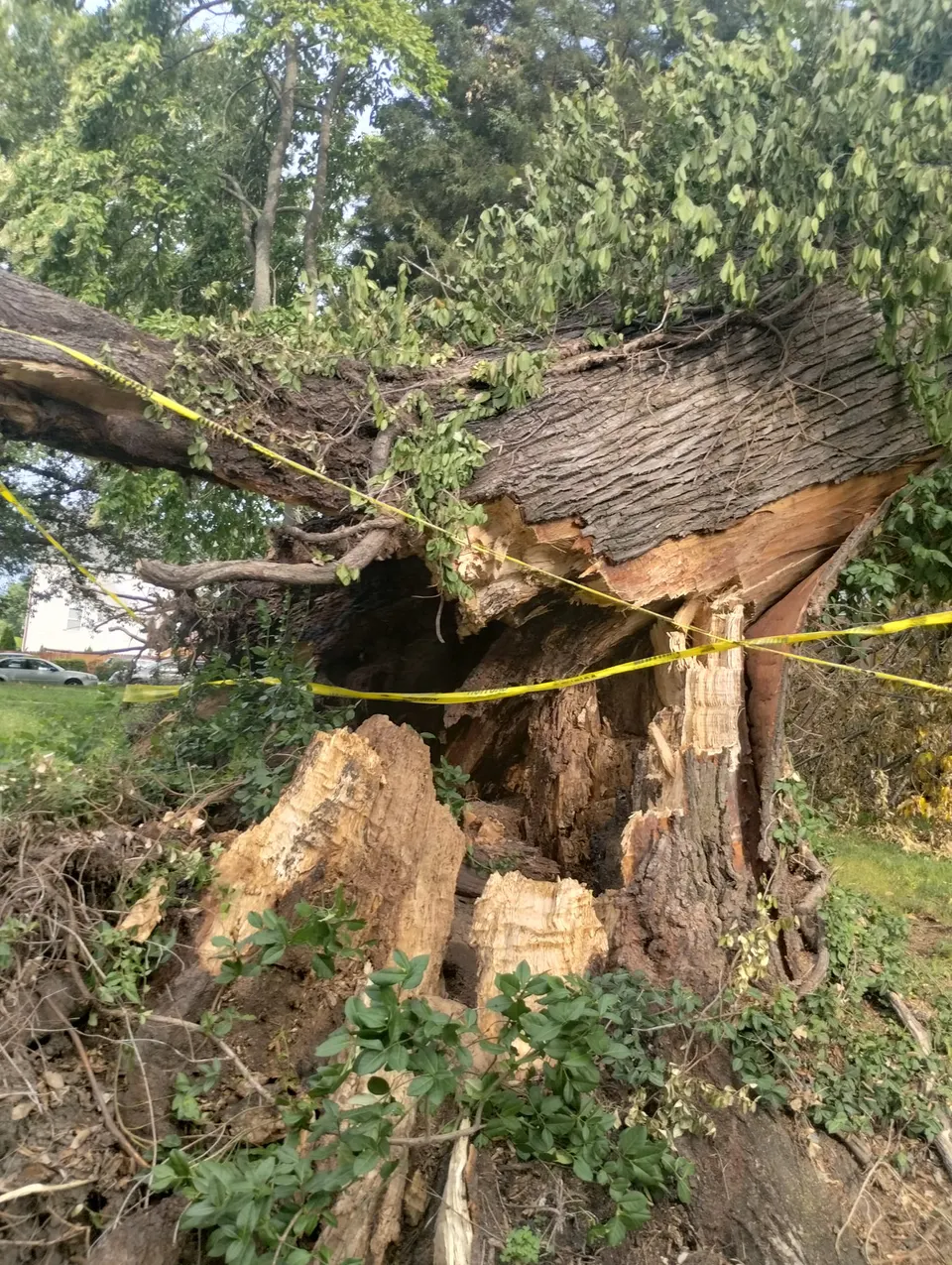
- Dated photos of cause and damage. Show the break — a snapped trunk, a lifted root plate, a lightning scar — and show the tree on the structure. Add a photo of the weather that day if you have one; local news coverage of the storm works too.
- A written statement on the cause. An arborist's note that the tree failed from wind loading on a healthy trunk (or from a known defect) supports the "covered peril" argument. Ask your removal company for it in writing.
- An itemized invoice. Separate lines for removal from the structure, debris hauling, stump work if any, and emergency tarping. Insurers treat each of those differently and a single number invites a cut.
- The claim number on everything. Write it on the invoice, the estimate, and every receipt you submit.
Thompson Tree Care provides written estimates and itemized invoices on every storm job so homeowners have what the adjuster asks for. We do not bill insurers directly or promise approvals — but we make sure the paperwork is clean.
How Do I Prevent the Next Claim?
Every insurer's favorite claim is the one that never happens, and the trees most likely to fall in the next storm usually show warning signs long before they go. Walk your property each spring and fall and look for the things we cover in our guide to the signs a tree is dead or dying: dead limbs over the roof, fungus at the base, cracks in the trunk, or a lean that has changed since last year.
Not every risky tree has to come down. A tree with a weak crotch or a heavy limb over the house can often be secured with cabling and bracing, and a certified arborist assessment tells you which trees are genuinely hazardous versus which just look intimidating. Preventive work is paid out of pocket, but it is the cheapest tree bill you will ever get compared to a roof, a deductible, and an emergency crew at 2 a.m.
If you have a tree you are worried about anywhere in the St. Louis area — Kirkwood, Chesterfield, Florissant, O'Fallon, or Belleville — call (314) 712-3035 for a free, no-obligation estimate. Senior and veteran discounts are available.
Frequently Asked Questions
Usually not. Most homeowners policies pay for tree removal only when the fallen tree damaged a covered structure such as your house, garage, fence, or deck, or when it blocks a driveway or a wheelchair-accessible entrance. A tree that lands in open lawn without hitting anything is typically the homeowner's expense.
In most cases you file with your own homeowners insurance, regardless of whose yard the tree grew in. Your neighbor may be held responsible only if they knew the tree was dead or hazardous and failed to act. This is general information, not legal advice — confirm the specifics with your insurer or an attorney.
Fallen tree removal in the St. Louis area typically runs $300 to $2,500 depending on the size of the tree, where it landed, and how hard it is to reach. Trees resting on a roof or tangled in fences and utility lines cost more because they require rigging and sectional cutting. Emergency and after-hours response usually carries a premium over standard rates.
Get everyone out of the affected rooms, stay away from any downed power lines and call 911 or Ameren, then photograph the damage before anything is moved. Contact your insurer to open a claim, request a written removal estimate, and keep every receipt. Call Thompson Tree Care at (314) 712-3035 for 24/7 emergency response in the St. Louis area.