Severe weather is a fact of life in Saint Louis. High winds, ice storms, and tornadoes can turn healthy trees into immediate hazards—splitting trunks, uprooting root systems, and dropping heavy limbs on homes, vehicles, and power lines. Thompson Tree Care and Landscaping has been responding to emergency tree situations across the Saint Louis metro for more than a decade, and we know that what you do in the first hours after a storm can make the difference between a quick recovery and a prolonged, dangerous situation.
Step 1: Assess Safety Hazards
Before you inspect damage or attempt any cleanup, make sure the area is safe. Storm-damaged trees create multiple life-threatening hazards:
Downed Power Lines
Never approach a tree that's touching or near power lines. Assume all downed lines are energized. Trees conduct electricity—touching a tree in contact with a live wire can be fatal. Keep everyone at least 30 feet away and call your utility company immediately.
Structural Instability
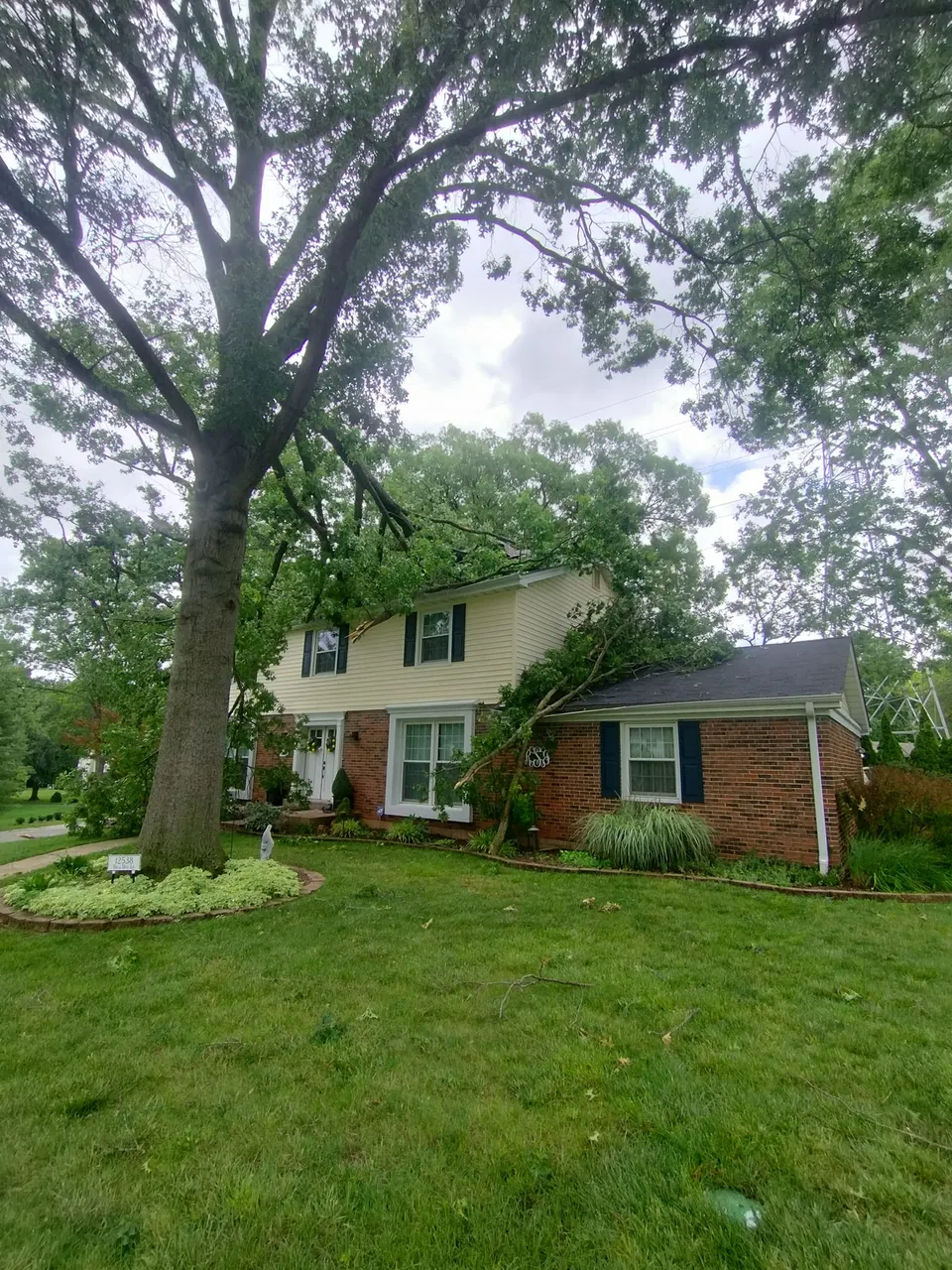
If a tree has fallen on your home, garage, or other structure, evacuate the building. Even if the damage looks minor, the weight can compromise walls, roofs, and foundations. Don't go back inside until a professional confirms it's safe.
Hanging Branches ("Widow Makers")
Partially broken or hanging branches are under extreme tension. They can fall without warning, especially when wind picks up or when vibrations from nearby activity dislodge them. Keep everyone away from the tree's drip line until a professional removes the hazard.
If anyone is injured or trapped, call 911 first. If the situation is stable but dangerous, contact a 24/7 emergency tree service like Thompson Tree Care at (314) 712-3035. We provide rapid response for life-safety tree removals throughout Saint Louis and surrounding areas.
Step 2: Document the Damage
Once you've confirmed the area is safe, document everything before cleanup begins. Insurance claims require thorough evidence:
- Take photos from multiple angles — Capture wide shots showing the full scene and close-ups of damage to structures, vehicles, fences, and the tree itself.
- Record timestamps — Most smartphones embed timestamps in photos. If not, note the date and time manually.
- Document the tree's condition before the storm (if possible) — If you have earlier photos showing the tree was healthy, they can support your claim that the damage was storm-related, not pre-existing decay.
- List damaged property — Note everything affected: roof shingles, siding, windows, vehicles, landscaping, fences, etc.
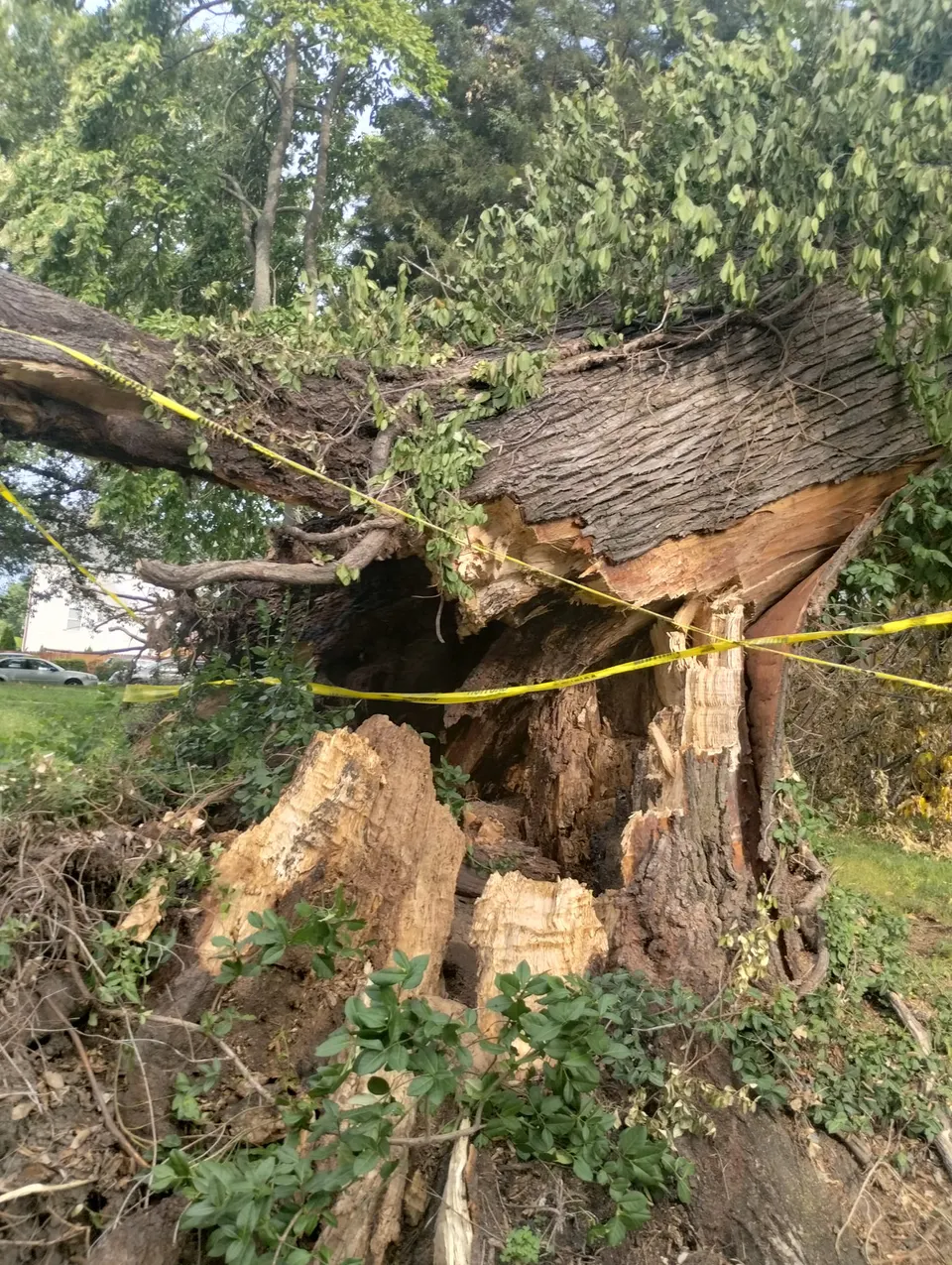
- Keep debris samples if asked — Some insurers require proof that the tree was healthy (no rot or disease). Your arborist can help identify this.
Do not remove debris or begin repairs until your insurance adjuster has inspected the scene—doing so can jeopardize your claim.
Step 3: Contact Your Insurance Company
File your homeowner's insurance claim as soon as possible. Most policies cover storm-damaged tree removal if the tree damaged a structure or is blocking access (driveway, road). Here's what to know:
What's Typically Covered
- Tree removal when a tree falls on your home, garage, fence, or other insured structure
- Removal of trees blocking driveways or access points
- Structural repairs to damaged buildings
- Replacement of damaged landscaping (up to policy limits, usually $500-$1,000)
What's Usually NOT Covered
- A tree that falls in your yard but doesn't damage any structures
- Preventative removal of hazardous trees before they fall
- Damage caused by lack of maintenance or pre-existing decay
Your insurer will send an adjuster to assess the damage. Be present during the inspection and provide all your documentation. If the tree removal is covered, the insurer will either reimburse you after the work is complete or pay the contractor directly—policies vary.
For guidance on identifying whether a damaged tree can be saved, read our article on when to remove a tree.
Step 4: Hire Emergency Tree Removal Professionals
Storm-damaged trees are among the most dangerous removal scenarios. Hanging limbs, split trunks, and trees resting on structures require specialized equipment, rigging techniques, and experience. This is not a DIY project.
What to Look for in an Emergency Tree Service
- 24/7 availability — Storms don't wait for business hours. Choose a service that responds around the clock.
- Certified arborists — Certification indicates formal training in tree biology, hazard assessment, and safe removal techniques.
- Full insurance — Verify the company carries liability insurance and workers' compensation. You don't want to be liable if someone gets hurt on your property.
- Local reputation — Check reviews and ask neighbors. In an emergency, you want a known, trusted service—not the first name that pops up in a search.
- Transparent pricing — Reputable companies provide clear estimates, even in emergencies. Avoid anyone who quotes over the phone without seeing the site.
Thompson Tree Care provides dangerous tree removal services with experienced crews, crane-assisted rigging when needed, and full insurance coverage. We prioritize safety and work closely with insurance adjusters to ensure claims are processed smoothly.
Step 5: Temporary Protective Measures
If a tree has damaged your roof or siding, you may need to take temporary steps to prevent further damage while you wait for repairs:
- Tarping — Cover exposed roof areas with heavy-duty tarps to prevent water intrusion. Secure them properly—loose tarps can cause more damage in wind.
- Board broken windows — Prevent rain, animals, and intruders from entering.
- Shut off utilities if needed — If a tree has damaged gas, electric, or water lines, shut off the relevant utility and call the provider.
Most insurance policies require you to mitigate further damage. Keep receipts for tarps, boarding materials, and any emergency repairs—these are usually reimbursable.
Step 6: Post-Removal Cleanup and Stump Grinding
Once the tree is removed, you'll likely be left with debris and a stump. Professional tree services typically include debris removal and chipping, but stump grinding is often a separate service.
We recommend grinding stumps 6-12 inches below grade so you can replant grass or landscape over the area. Leaving stumps creates tripping hazards, attracts pests, and makes lawn maintenance difficult. For more on this, see our comparison of stump grinding vs. stump removal.
Step 7: Inspect Remaining Trees
After a severe storm, inspect other trees on your property. Even trees that didn't fall may have sustained hidden damage:
- Cracks in the trunk or major limbs
- Leaning that wasn't present before the storm
- Exposed or lifted roots
- Large sections of missing bark
- Hanging branches or split crowns
An arborist can assess storm-weakened trees and recommend corrective pruning or removal before the next weather event. Preventative maintenance is far less expensive—and less stressful—than emergency removal.
For advice on the best timing for tree trimming after storm damage, read our guide on the best time to trim trees in Missouri.
Frequently Asked Questions
Evacuate the area immediately if there's structural damage or exposed electrical wiring. Call 911 if anyone is injured or trapped. Once safe, contact your homeowner's insurance and a 24/7 emergency tree removal service. Do not attempt to remove the tree yourself—heavy limbs and structural instability create serious hazards.
Usually, yes—if the tree damaged a structure (home, garage, fence) or is blocking access. Most policies cover tree removal as part of the overall claim. However, if a tree falls in your yard without damaging structures, it's typically not covered. Review your policy and document everything with photos before cleanup begins.
No. Hanging or partially broken branches are under tension and can snap unpredictably, causing serious injury or death. These are called 'widow makers' for a reason. Always hire a professional with proper equipment and training to remove storm-damaged limbs safely.
Thompson Tree Care offers 24/7 emergency response throughout the Saint Louis metro area. During severe weather events, we prioritize life-safety situations—trees on homes, blocking roads, or near power lines—and typically respond within 2-4 hours depending on demand and road conditions.