Humid summers, wet springs, clay soil, ice storms, and a long list of imported pests mean almost every mature yard tree in the St. Louis metro is fighting something. Most of it is cosmetic or treatable, and the few problems that are genuinely dangerous have clear warning signs. This guide from Thompson Tree Care's certified arborist team covers the seven diseases and pests we are asked about most across St. Louis, Kirkwood, Chesterfield, Florissant, O'Fallon, and Belleville: what each looks like, which trees it hits, whether it can kill the tree, and what to do next. Each section links to a deeper guide.
What are the brown cone-shaped bags hanging on my evergreen?
What it looks like: Spindle-shaped bags, one to two inches long, made of silk and bits of foliage, hanging from branches like small pine cones. By late summer the bags are brown, and the foliage around them is stripped or browning.
Which trees it hits here: Bagworms feed on more than a hundred species, but in St. Louis they do the most damage to arborvitae, junipers, spruce, and other evergreens planted as screens and hedges. Deciduous trees such as maple and honeylocust usually recover.
Is it fatal? It can be for evergreens. Bagworm caterpillars eat needles, and a conifer that is stripped bare cannot regrow foliage from old wood the way a maple can. A heavy infestation for two seasons in a row often kills arborvitae outright.
What to do: Timing is everything. Hand-picking and destroying bags in fall, winter, or early spring removes the eggs before they hatch. Once the tiny caterpillars emerge in late spring, they are vulnerable to targeted sprays for a few weeks; after the bags harden in midsummer, sprays barely work. Our full guide to getting rid of bagworms in St. Louis covers the hand-pick versus spray decision and when a stripped evergreen is past saving.
Why does my oak tree have brown balls on it?
What it looks like: Round, woody, or spongy growths on twigs, leaves, or small branches, from pea-sized to golf-ball-sized. Some are smooth and tan, some are horned and knobby, and some look like clusters of tiny berries on the underside of leaves.
Which trees it hits here: Every oak species can host galls, but the ones that matter in St. Louis are the horned and gouty galls on pin oaks and other red-oak-group trees, which are extremely common street and yard trees in older neighborhoods.
Is it fatal? Rarely. Galls are the tree's reaction to tiny cynipid wasps laying eggs in its tissue, and the vast majority are purely cosmetic. Twig galls are the exception: when horned or gouty galls girdle enough branches, whole sections of the canopy die back, and a pin oak that has been fighting them for years can look ragged and thin.
What to do: Insecticides are almost never effective because the larvae are protected inside the gall. The realistic treatment is pruning out heavily galled twigs while the tree is dormant, keeping the tree vigorous, and monitoring. Read our oak gall guide to tell harmless leaf galls from the twig galls that deserve attention.
Why is my oak dropping green leaves in summer?
What it looks like: Leaves at the top and outer edges of the crown turn bronze or brown from the tip and margin inward, then drop while still partly green. In red oaks the whole tree can defoliate in a matter of weeks in early to mid summer. White oaks decline branch by branch over several years.
Which trees it hits here: Oak wilt is a fungal disease confirmed across Missouri. Red-oak-group trees (pin oak, red oak, black oak, shingle oak) are highly susceptible; white oak, bur oak, and post oak are more resistant but not immune.
Is it fatal? For red oaks, usually yes, and quickly. The fungus plugs the tree's water-conducting vessels, and once symptoms show in a red oak there is no cure. It also spreads underground through root grafts to neighboring oaks of the same group.
What to do: Prevention beats treatment. Never prune oaks from April through July, when the sap beetles that carry the fungus are active and attracted to fresh wounds; if a storm breaks a limb in that window, seal the wound immediately. Preventive fungicide injections can protect high-value oaks near an infected tree. Infected red oaks should be removed promptly and the wood handled carefully. Our guide to oak wilt in Missouri covers symptoms by species, pruning timing, and treatment options.
Why do my pear tree's branch tips look burned?
What it looks like: Blossoms and shoot tips suddenly wilt, turn brown or black, and curl over into a hook, as if scorched by a torch. Dead leaves stay attached. Sunken cankers form on branches, and in wet weather a sticky ooze may appear.
Which trees it hits here: Fire blight is a bacterial disease of the rose family. In St. Louis yards it shows up most on Bradford and other Callery pears, along with crabapples, apples, hawthorns, and serviceberries.
Is it fatal? It can be, especially on a Bradford pear that is already structurally weak. Bradford pears also split apart at their tight branch unions once they reach 15 to 25 years old, and they seed aggressively into fields and roadsides, which is why Missouri is phasing them out and why many homeowners decide to replace rather than treat.
What to do: Prune infected branches during dry, dormant weather, cutting well below the visible damage and disinfecting tools between cuts. Avoid heavy nitrogen fertilizer, which pushes the soft growth fire blight loves. For a Bradford pear with blight, splitting limbs, or a lean, removal and replacement with a native tree is often the better investment; see Bradford pear problems and removal in Missouri.
Why is my ash tree thinning from the top down?
What it looks like: Canopy dieback that starts at the top, sprouts shooting from the trunk and large limbs, vertical bark splits, heavy woodpecker activity that leaves patches of pale "blonded" bark, and tiny D-shaped exit holes about an eighth of an inch across.
Which trees it hits here: Only ash trees, but ash was one of the most widely planted street and yard trees in the St. Louis region for decades, so the damage is everywhere.
Is it fatal? Yes, without treatment. Emerald ash borer larvae feed just under the bark and cut off the tree's water supply; an untreated ash typically dies within a few years of infestation. Dead ash also becomes brittle fast, which makes it more dangerous and more expensive to remove the longer it stands.
What to do: An ash that still has most of its canopy can be protected with trunk injections repeated every two to three years. An ash that has lost roughly a third or more of its crown is usually a removal. The treat-or-remove decision, costs, and replacement species are covered in Emerald Ash Borer in St. Louis: Treat or Remove?
Why are my sycamore or maple leaves blotchy and falling in spring?
What it looks like: Irregular tan or brown blotches on leaves, often along the veins, followed by curling and early leaf drop. Sycamores may lose most of their first flush of leaves in a cool, wet May and look nearly bare before pushing new growth in June. Twig dieback and crooked, zigzag branching build up over years.
Which trees it hits here: Anthracnose is a group of fungal diseases that favor cool, wet springs, which St. Louis delivers regularly. Sycamore and London planetree are hit hardest; white oak, maple, ash, and dogwood get their own versions.
Is it fatal? Almost never on an established tree. It is ugly and stressful, and repeated years of defoliation weaken a tree, but healthy sycamores and maples releaf and carry on. Dogwood anthracnose is the serious exception and can kill flowering dogwoods over several seasons.
What to do: Rake and dispose of fallen leaves and twigs so the fungus has less material to overwinter in. Prune out dead twigs and thin the crown so foliage dries faster after rain. Keep the tree watered in dry spells and avoid overhead irrigation. Fungicide sprays are rarely worth it on large shade trees; they are a consideration for a valuable dogwood, and that is a case where we would assess and coordinate treatment with a licensed applicator.
What do mushrooms growing at the base of my tree mean?
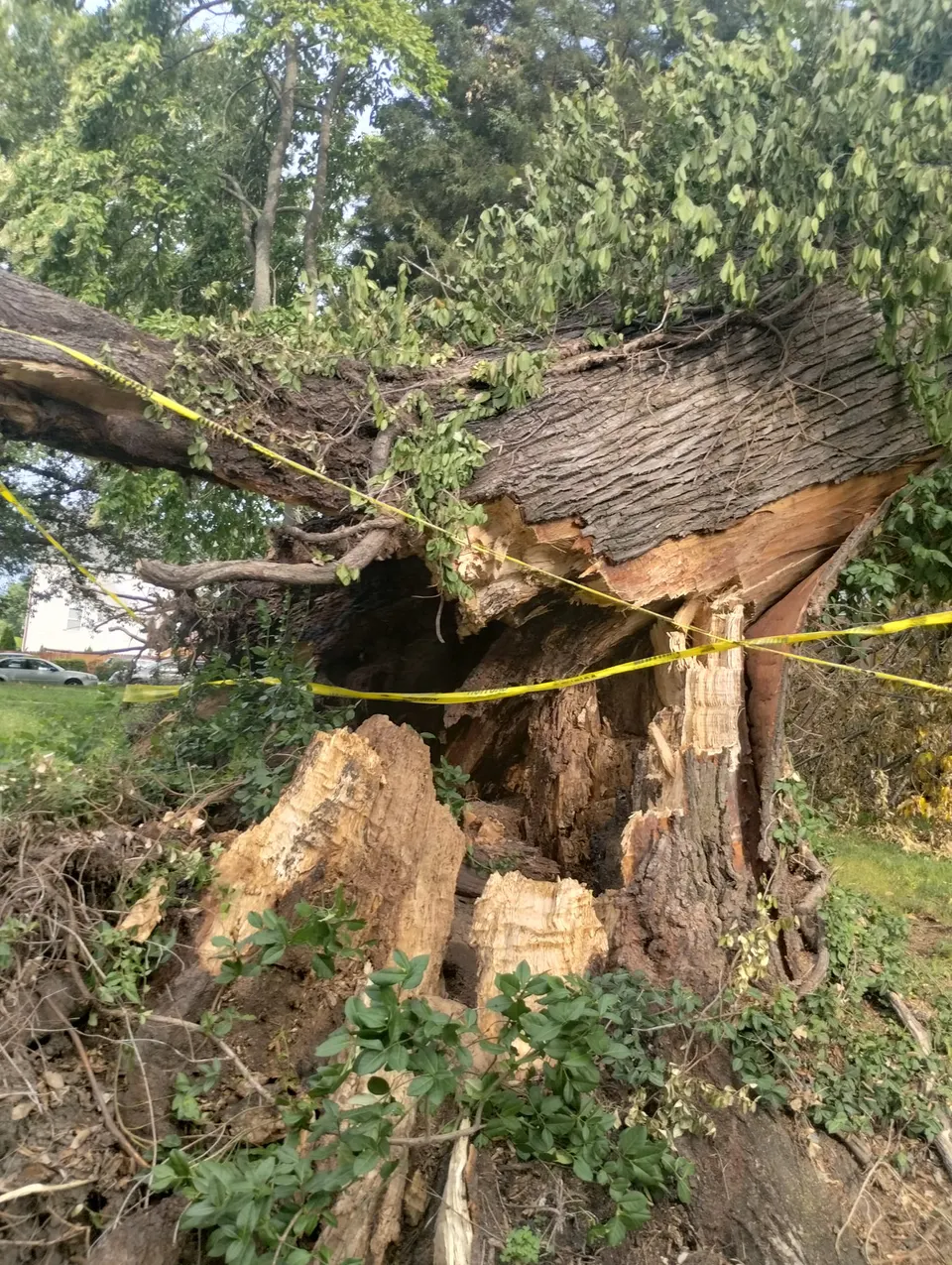
What it looks like: Mushrooms clustered around the root flare, shelf-like conks or brackets growing directly out of the trunk, soft or sunken bark, hollow sounds when the trunk is tapped, or sawdust-like material at the base. Sometimes the only clue is a thinning canopy on one side of the tree.
Which trees it hits here: Any tree, but the classic St. Louis cases are old silver maples, pin oaks, and cottonwoods with past wounds, mower damage, buried root flares from mulch volcanoes, or years of sitting in wet clay.
Is it fatal? Fungal fruiting bodies on the trunk or roots mean decay is already established inside the wood. The tree may live for years, but it is losing the structural wood that holds it up, and that decay cannot be reversed. This is the category most likely to end in a sudden failure onto a house, a car, or a person.
What to do: Do not just knock the mushrooms off; they are the symptom, not the problem. Have the tree assessed to estimate how much sound wood remains, especially if it leans toward a target. Our guide to the signs a tree is dead or dying walks through fungus, cavities, and the other red flags that point to structural risk.
When is a sick tree a removal, not a treatment?
Most homeowners would rather save a tree than cut it down, and usually that is the right instinct. Treatment and corrective pruning make sense when the problem is caught early and the tree is otherwise healthy. The calculus changes when one or more of these is true:
- The disease has no cure and the tree is a source of spread. A red oak with oak wilt or an ash with advanced borer damage will not recover and can infect its neighbors.
- Structural wood is compromised. Trunk decay, large cavities, or a hollow base mean the tree can fail regardless of how green the canopy looks.
- More than a third of the canopy is gone. Trees can rebuild from modest losses; they rarely come back from major dieback, and every season of decline makes the eventual removal more hazardous.
- The tree is over a target. A declining tree in a back corner can be monitored. The same tree over a bedroom, a driveway, or a power line is a different risk.
- The species is not worth the ongoing cost. Bradford pears and silver maples with recurring problems are usually better replaced than repeatedly treated.
When removal is the answer, sooner is safer and cheaper. Dead and decaying wood cannot be climbed, so a tree that could have been taken down conventionally may need a bucket truck or crane a year later. Our dangerous tree removal crew handles decayed and storm-compromised trees, routine tree removal covers the rest, and our tree removal cost guide explains what drives the price so there are no surprises.
How do you get a tree diagnosed in St. Louis?
Many of these problems look alike from the ground. Browning leaves can be oak wilt, anthracnose, drought stress, or root damage; a thinning canopy can be galls, borers, or decay. Guessing wrong wastes a season, and with oak wilt or ash borer a wasted season can cost the tree.
A certified arborist assessment from Thompson Tree Care and Landscaping starts with a walkthrough of the tree and its site: canopy condition, bark and trunk, root flare, soil, and what is around it. From there we tell you plainly whether the tree needs pruning, cabling, coordinated treatment through a licensed applicator, monitoring, or removal, along with a written estimate for any work. We have served the St. Louis metro since 2014 with more than 500 jobs completed, a 4.8-star Google rating from 60+ reviews, and crews that are licensed and insured. Estimates are free, senior and veteran discounts are available, and emergency service runs 24/7.
If something on your tree matches a description in this guide, call (314) 712-3035 or request an assessment online. Catching a problem in the right season is the difference between a small pruning job and a large removal.
Frequently Asked Questions
No single disease dominates, but the problems St. Louis arborists see most often are bagworms on evergreens, oak galls on pin oaks, anthracnose on sycamores and maples in wet springs, fire blight on Bradford pears, oak wilt in red oaks, emerald ash borer in ash trees, and root or trunk decay fungi on older shade trees.
Sometimes. Mushrooms or shelf-like conks growing from the trunk or root flare mean decay is already established inside the wood, and that cannot be reversed. Whether the tree is still safe depends on how much sound wood remains. A certified arborist can assess the extent of decay and tell you whether pruning and monitoring are enough or the tree needs to come down.
Hand-picking bagworms or raking anthracnose leaves is reasonable DIY work. Call a professional when a tree is losing more than a quarter of its canopy, shows bark splitting or fungal growth on the trunk, is an oak wilting in summer, is an ash showing dieback, or is large and close to your house, driveway, or power lines. Those situations involve safety and timing decisions that are hard to make from the ground.
Thompson Tree Care and Landscaping provides certified arborist assessments, corrective pruning, cabling and bracing, and removal of trees that cannot be saved. When a problem calls for chemical treatment such as a trunk injection or spray, we assess the tree and coordinate treatment with a licensed applicator so the right product is applied at the right time.